


At 11:21 AM Pacific Daylight Time, our “endless summer” officially ended and our Fall began. The celestial sun was above the equator, and if a person put a stake in the ground at high noon, no shadow would be cast. Our earth rotates on its axis and now the southern hemisphere has longer days, culminating with their first day of summer on 21 December, when the celestial sun will be above 23-degrees South latitude, the Tropic of Capricorn. The austral summer begins then with the longest day of the year, with 24-hours of sunlight beginning at 67 degrees S, the Antarctic Circle. These latitudes of 23 and 67 add up to 90 degrees Sourth, which is the South Pole, where a day begins that will last exactly 6-months without a sunset, followed by the austral winter in which there is complete darkness for 6-months. Our animal friends have to deal with these seasonal changes, a matter of survival, and they have the choice by doing one of four things: Migrate, hibernate, adapt or perish.
At the beginning and ending of our afternoon trip, found in the Mission Bay Channel entrance, we spotted several Coastal bottlenose dolphins, a delight, as they waited for us to come close and got a nice play-date with the pressure wave created by our moving vessel.
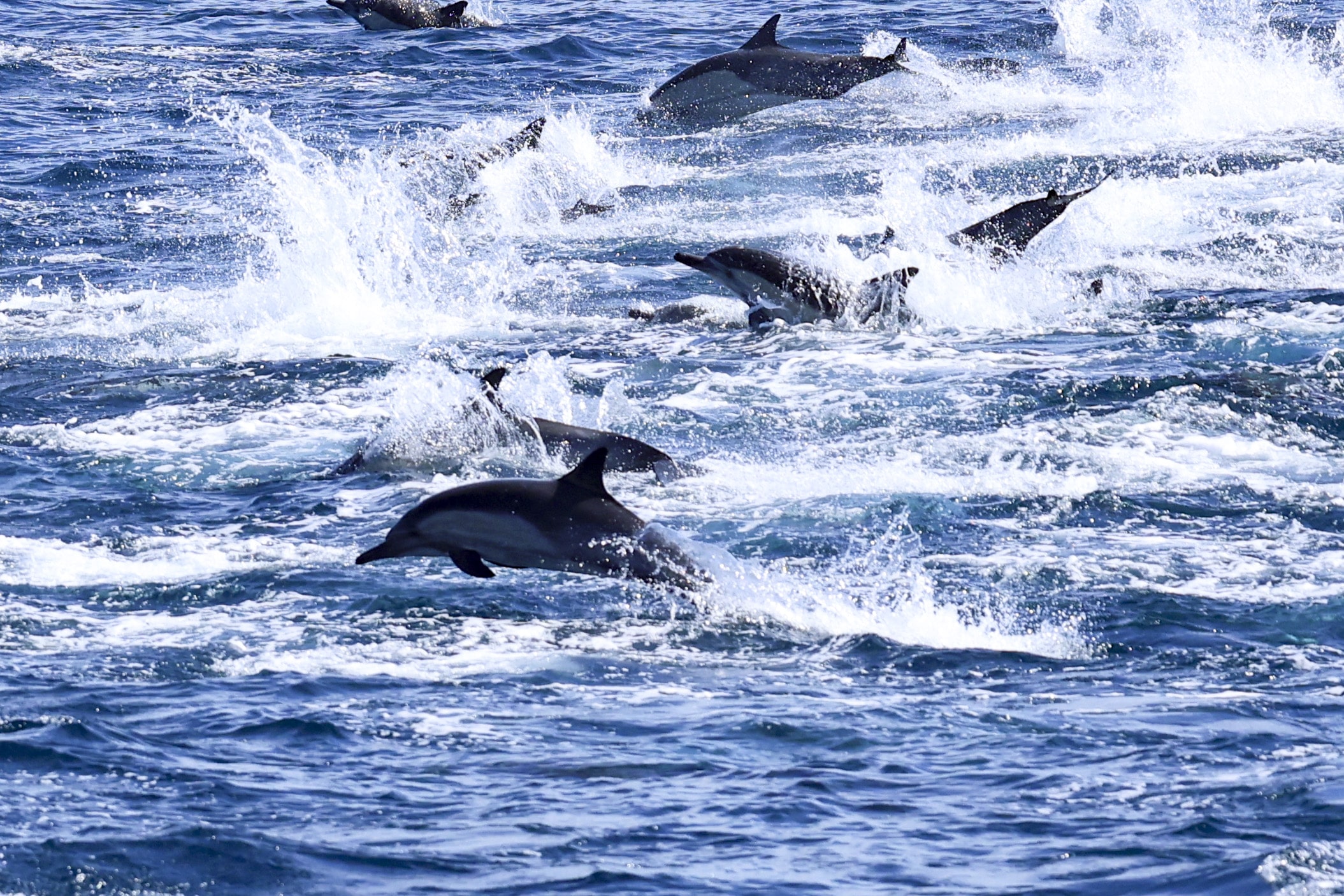
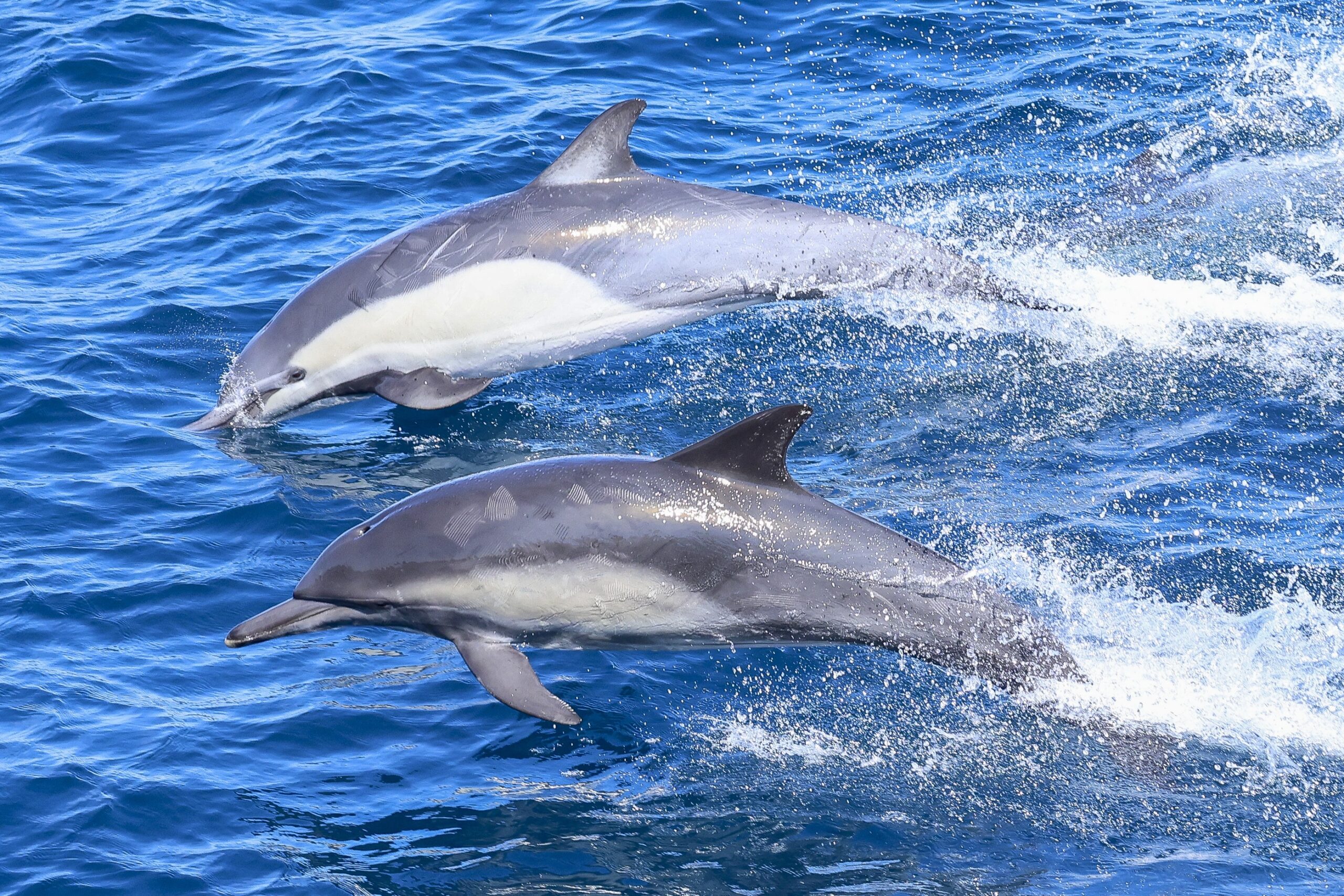
Captain Michael pushed us up to the northwest to the Scripps—San Diego submarine canyon off the coast of LaJolla and Scripps Institution of Oceanography. We actually got up to Los Peñasquitos Lagoon, part of Torrey Pines State Natural Reserve and the uplifted marine terrace sedimentary layers beneath the homes of Del Mar. After turning around, we spotted some splashing of water on the horizon and spent time with the long-beaked common dolphins, around 300 of them, looking for their next meal and foraging the vast Pacific Ocean. It was a glorious sight, with the phantasmagorical scintillating seas and dancing waters churned up the the 200–300 pound dolphins.
We saw nursery pods of cow/calf pairs, mothers and babies along with an amazing stampede, in which all of the animals suddenly detected what turned out to be a “false alarm”, a likely residual impact from the dolphin-eating killer whale pod that we had recently, the Eastern Tropical Pacific transient pod that visited a few days ago and preyed upon their much smaller cousins, these endearing long-beaked common dolphins. Hope you can join us soon on an ocean safari, thanks for tuning in via our social media. —Interpretive Natural Historian Greg McCormack