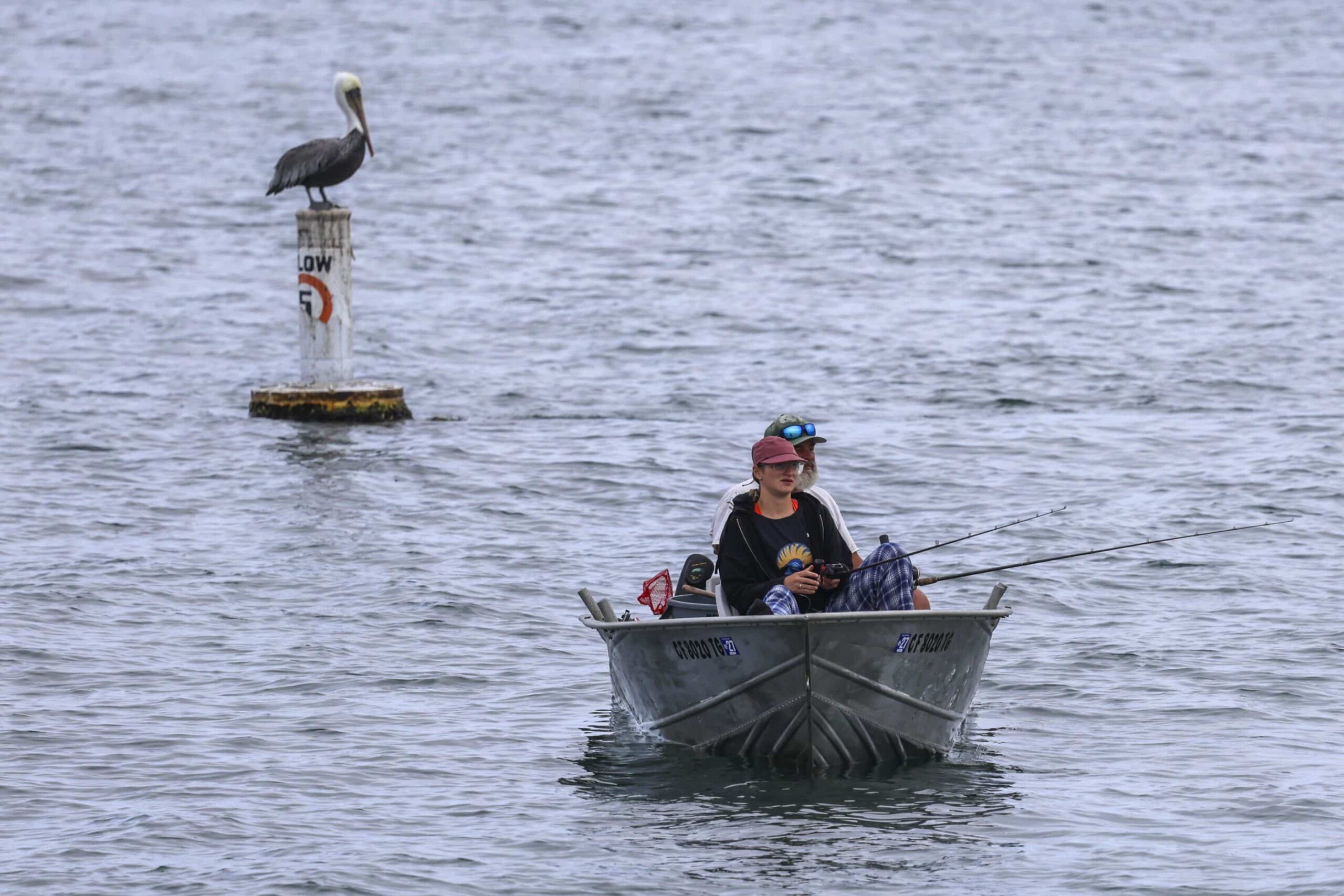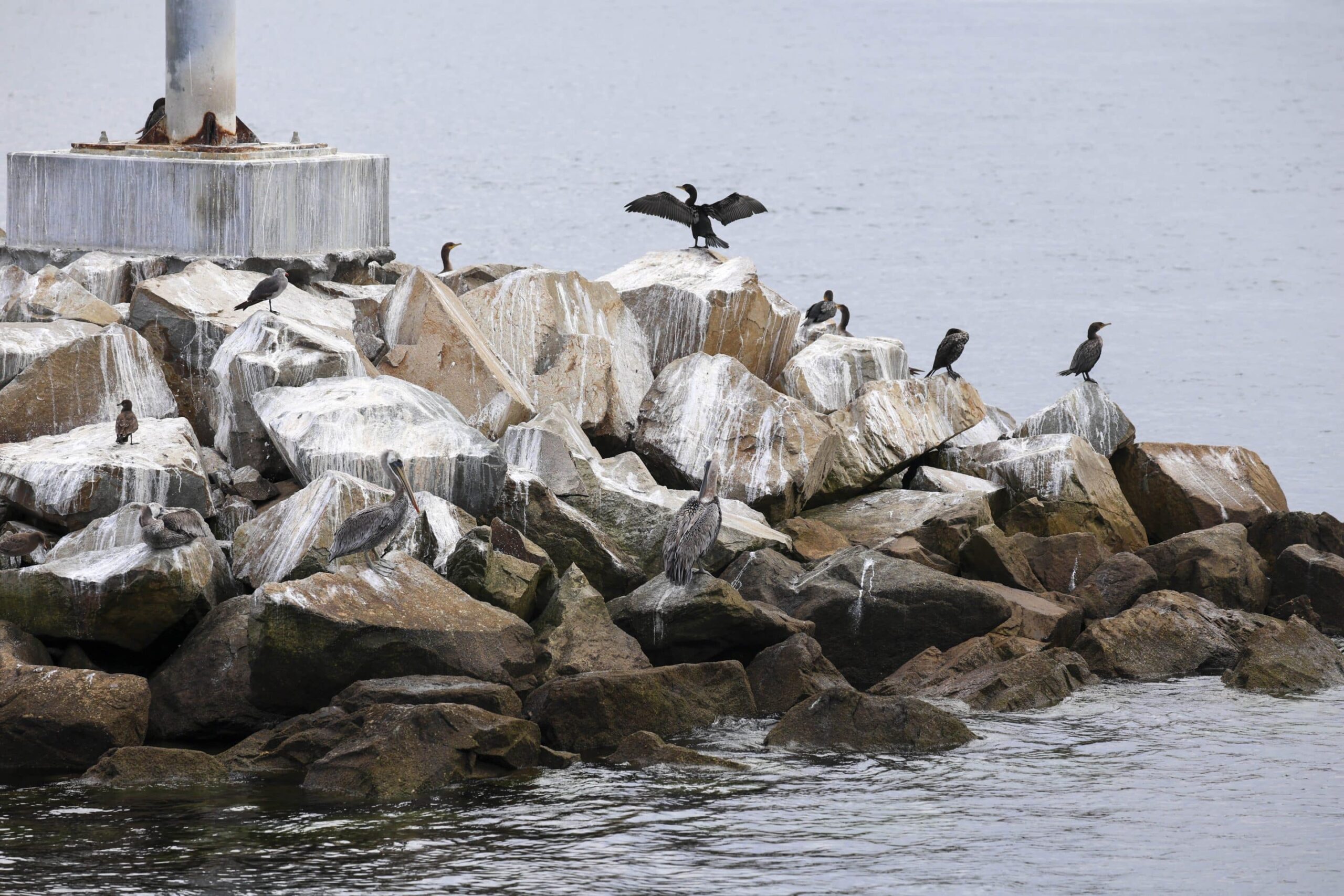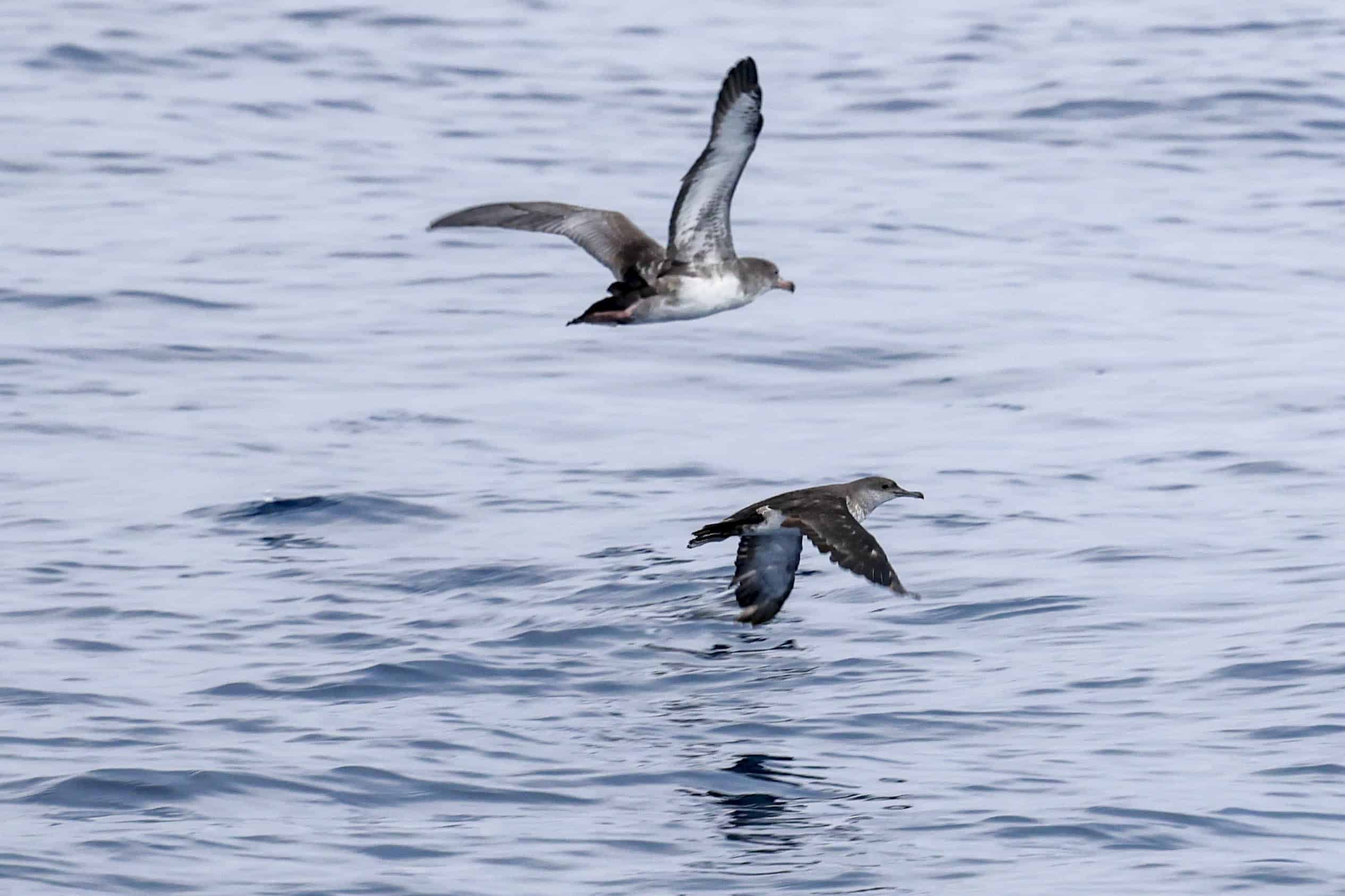
Our wildlife viewing began just a minute after we left the dock. Hundreds of birds and a dozen California sea lions, our feathered and flippered friends. We saw brown pelicans, snowy egrets, great egrets, Brandt’s cormorants, western gulls, Heermann’s gulls, and a great blue heron. Many of the birds were resting and maybe 25% of them were staring below through the slats to the live bait fish, kept in netted pens below. Now and then a quick jab and the bird is successful in finding a meal.
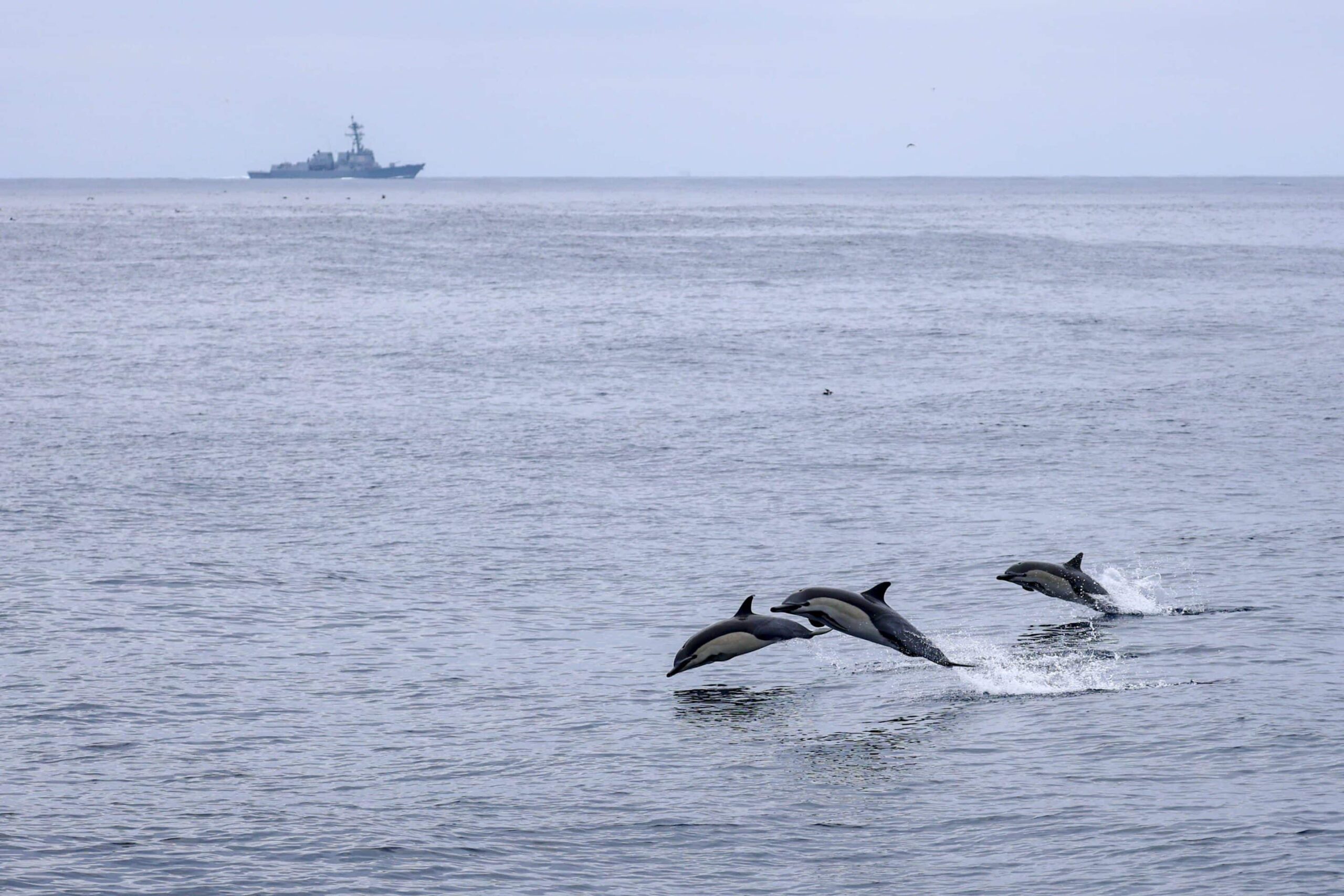
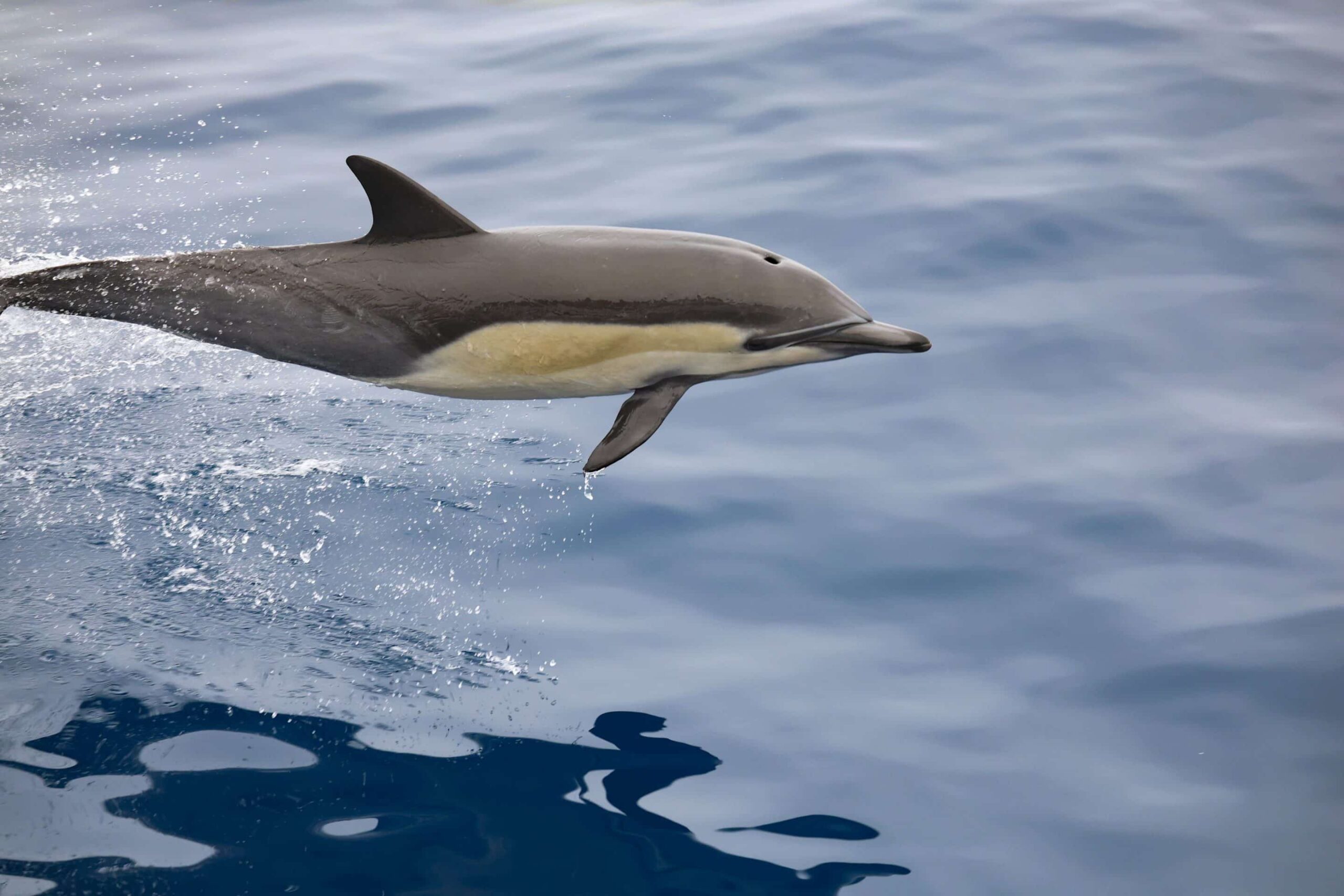
A bit bouncy in the Mission Bay channel entrance. We often have this marine layer in summer, what some call “natural air conditioning.” We could barely make out the Coronado Islands to the south, the northernmost islands in Baja California, Mexico, just 30-miles away. We also saw a car carrier on the horizon. Captain Michael brought us to the 9-Mile Bank, an underwater ridgeline known as the “Coronado Escarpment”. Once we got over the deep water, we decided to head southwest where many of the seabirds were flying and sure enough, we came across a huge pod of short-beaked common dolphins, many of them breaching and showing some impressive leaps, producing loud splashes. They were spread out over an area of more than 3-miles, probably around 1100 of them. We saw a tug boat towing a fuel barge and a couple of warships. One was the USS San Diego, an amphibious warship of the San Antonio Class. One of our passenger guests pointed to Seasats, a next generation ASV or autonomous surface vehicle, does research for private companies and monitors for harmful algal blooms and collects data for scientists. There was just a little bit of color on the horizon about 1/2-hour before the 7:39 PM sunset. It was a calm return to the Mission Bay Channel as dusk and lights were turning on in the city. Hope to see all of you as passengers on a near future boat trip. -Naturalist Greg