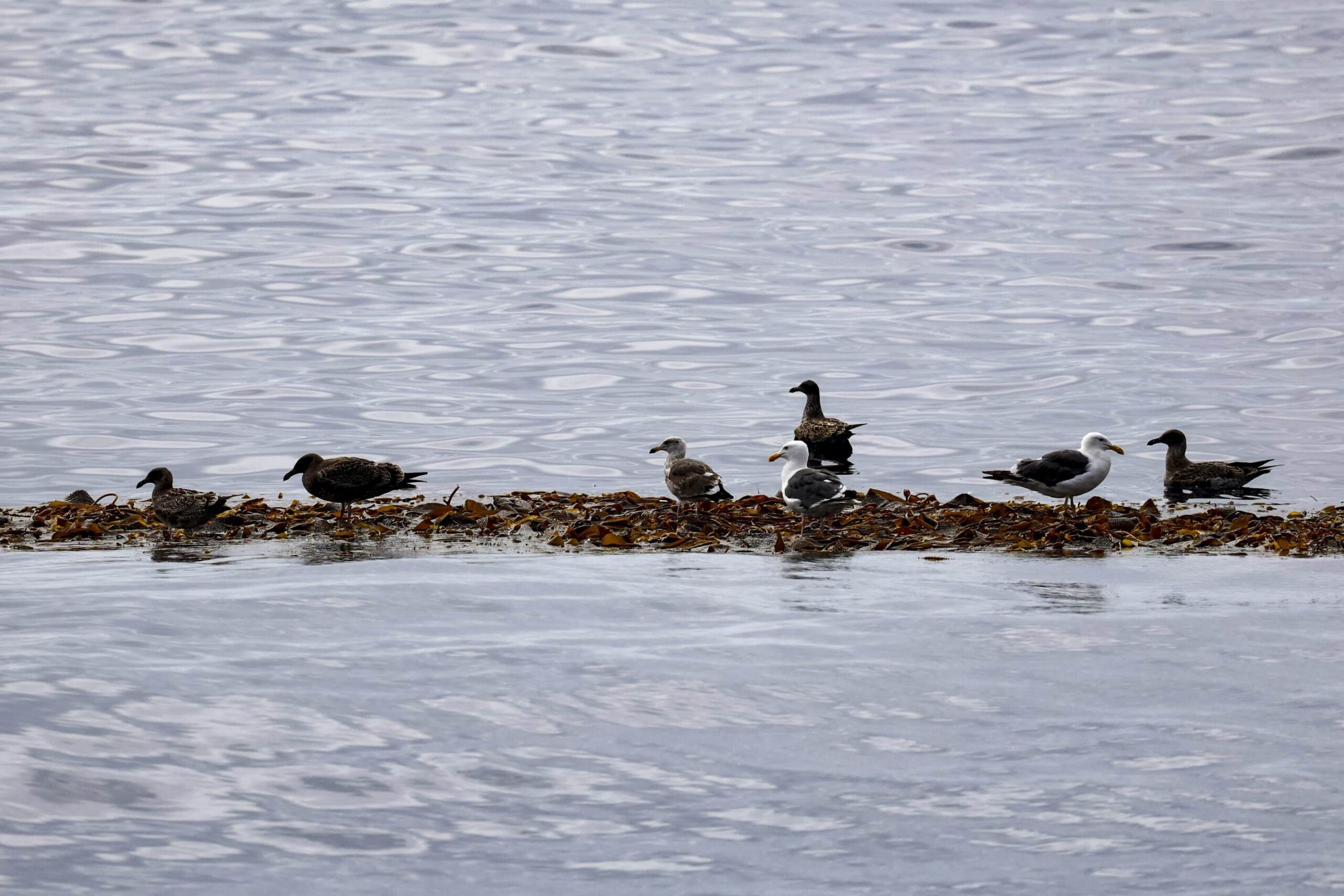
We went way offshore to the 9-Mile Bank, part of the Coronado Escarpment. It is an underwater ridgeline with interesting bathymetry for scientists that tow a torpedo-like device that does side-scan sonar, a type of mapping of the bottom of the ocean. Upwelling occurs way out here, which occurs when winds blow the surface waters away from the coast and cool, nutrient-rich waters come to the surface from the depths, leading to blooms of algae, the phytoplankton, which in turn feeds the zooplankton, the fish, the cetaceans and seabirds. We learned of food chains as kids, but this is more of a complex food web in which many animals eat each other.
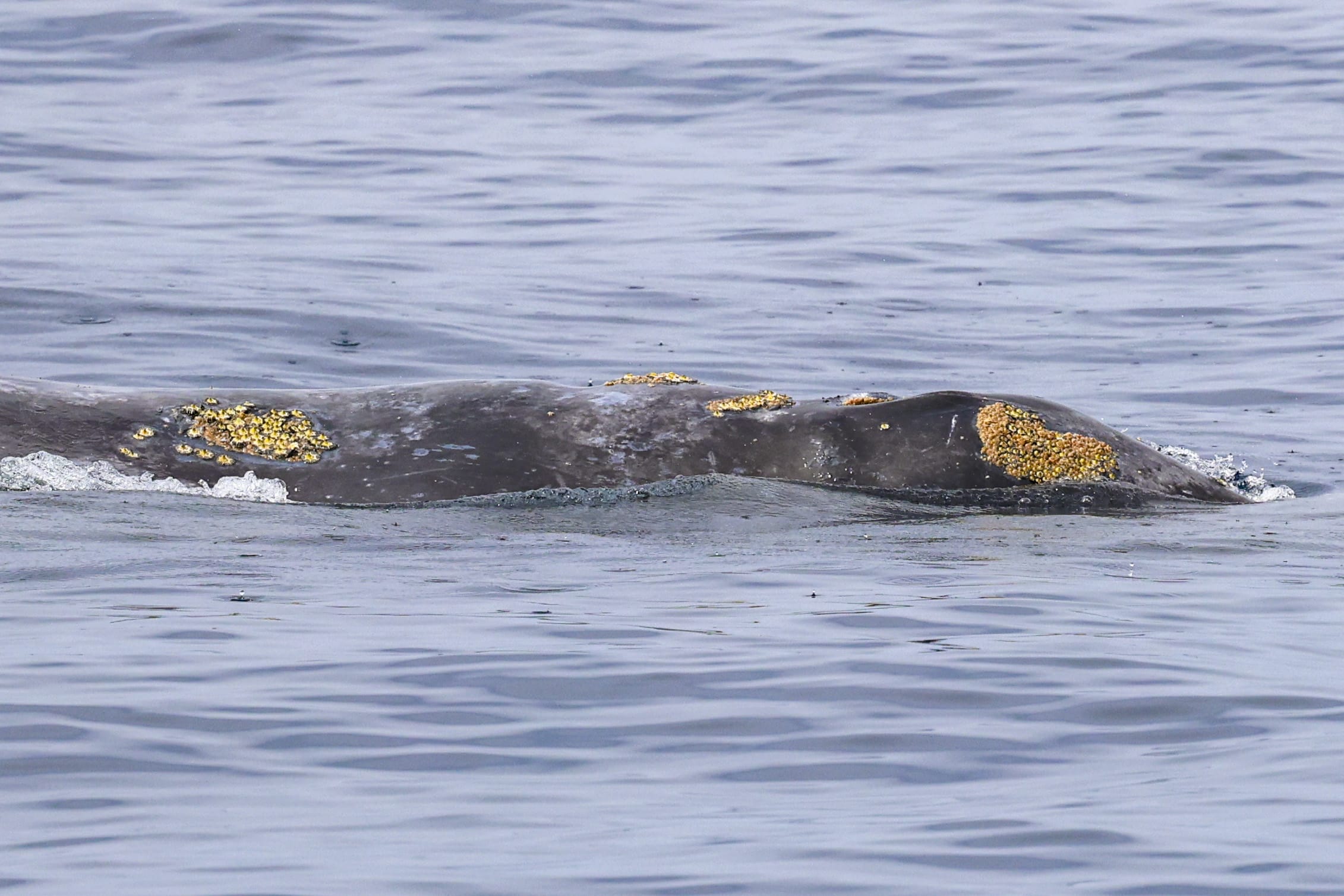
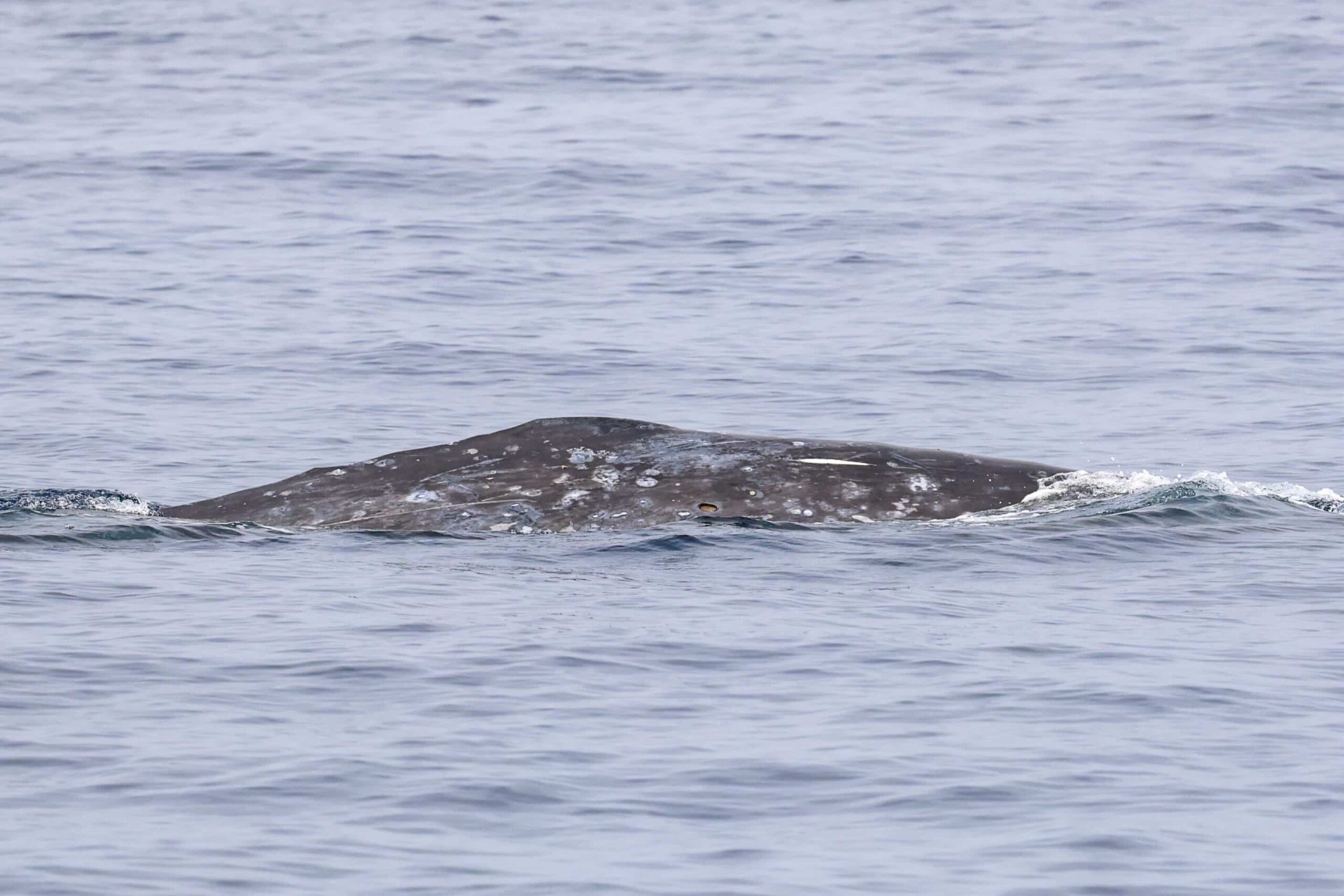
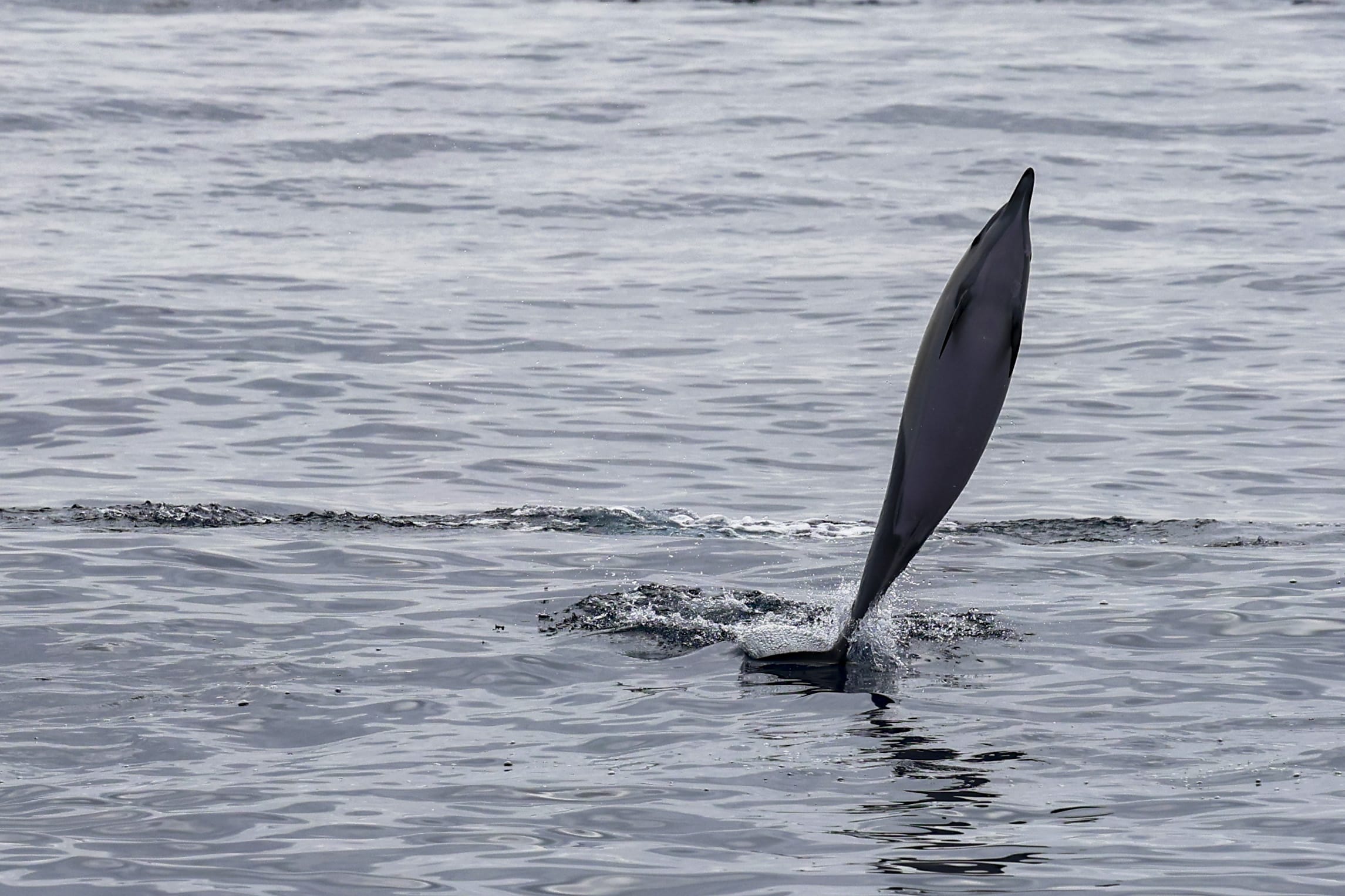
Perfect weather, calm seas and excellent visibility. We found around 750 common dolphins, about 350 short-beaked and another 400 long-beaked common dolphins. Captain John gave us great looks. Suddenly, word was out that there was a whale in the area. Sure enough, we had several good looks at a California gray whale. Typically, the population is feeding on amphipods, benthic invertebrate crustaceans, from May through October in the Arctic. This is not a common summer sighting. Some of you might know that they suffered a 40% drop in the population during an unusual mortality event, or UME during the years of 2019-23. This past year has not been good as well, but they are a resilient species. With a lack of sea ice in the arctic, witch traps plankton during the freeze and then releases during the thaw, we think the whales are suffering from nutritional stress, part of this is linked to climate change. These whales did come back from the brink of extinction twice in the last 175 years, so they are resilient and got off the endangered species list in 1994. -Naturalist Greg McCormack