September 2, 2025

Tuesday September 2, 2025 – PM

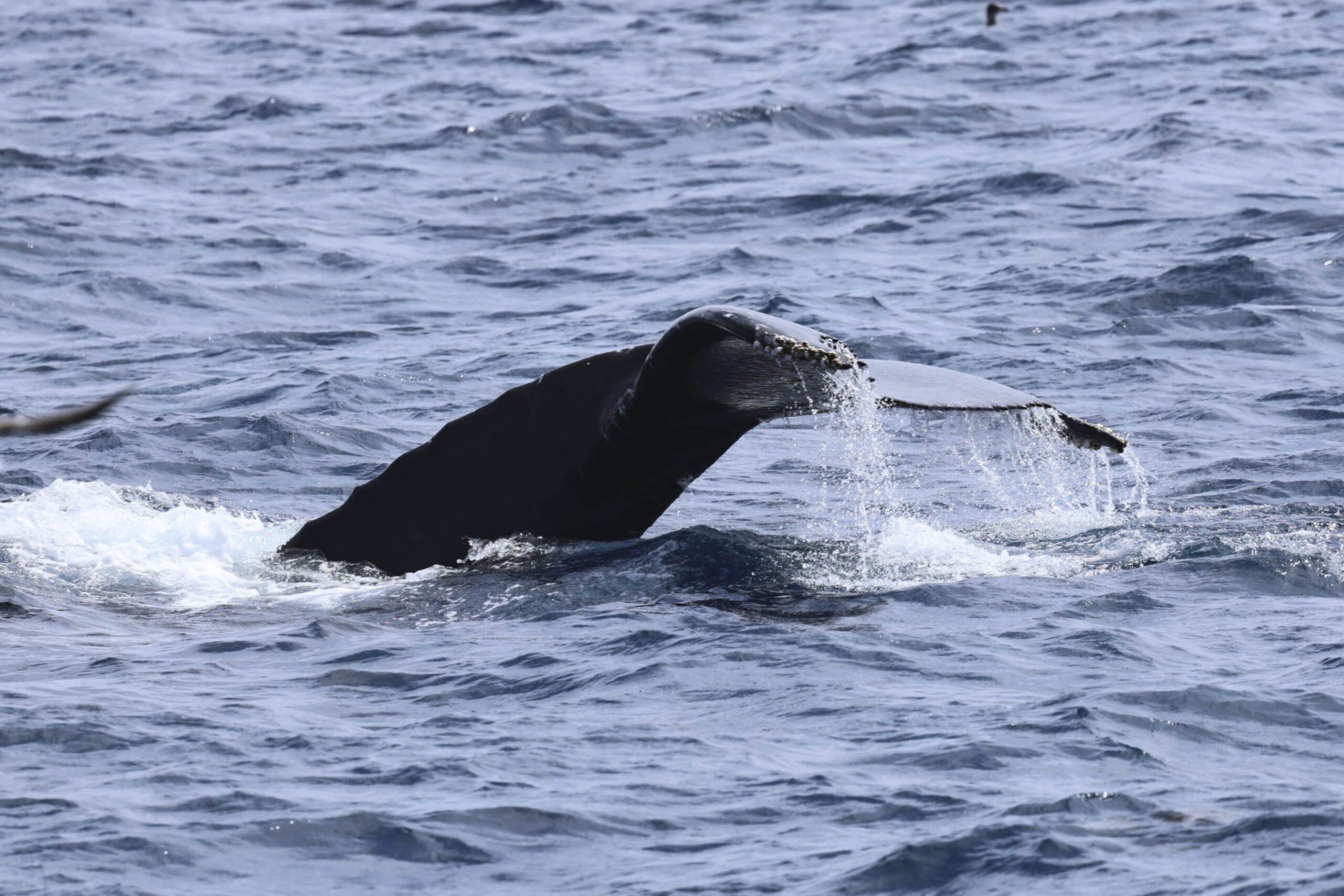
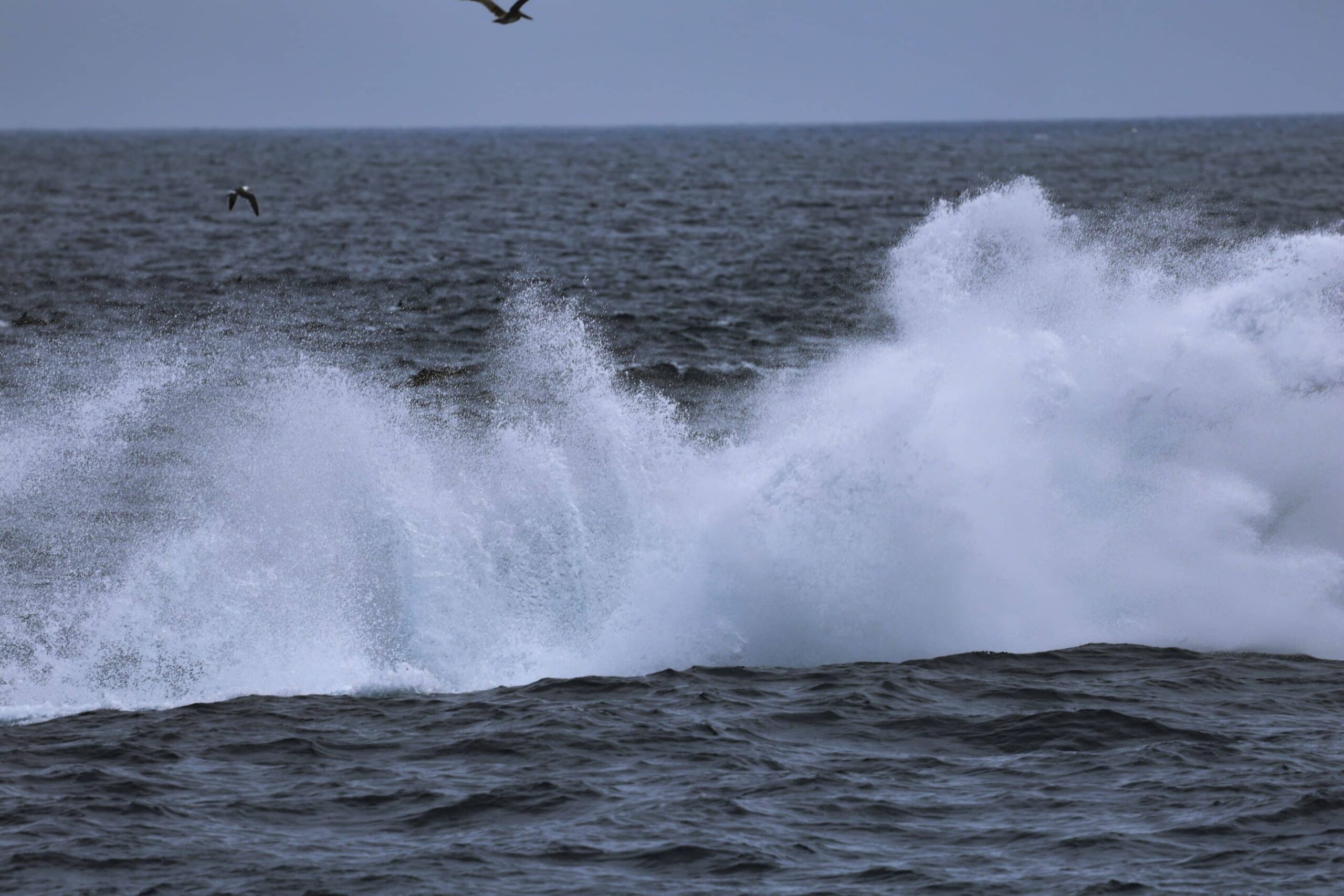
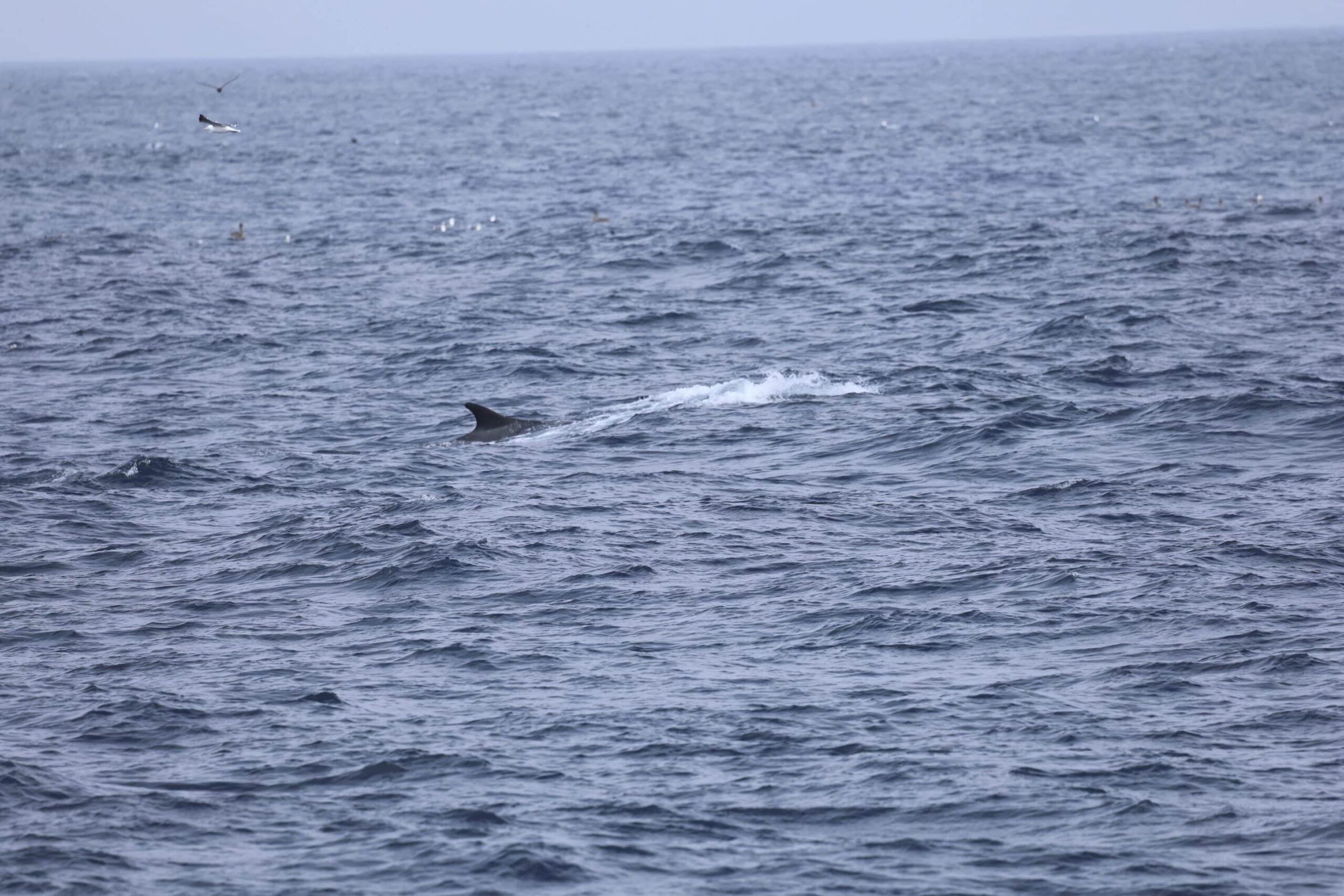
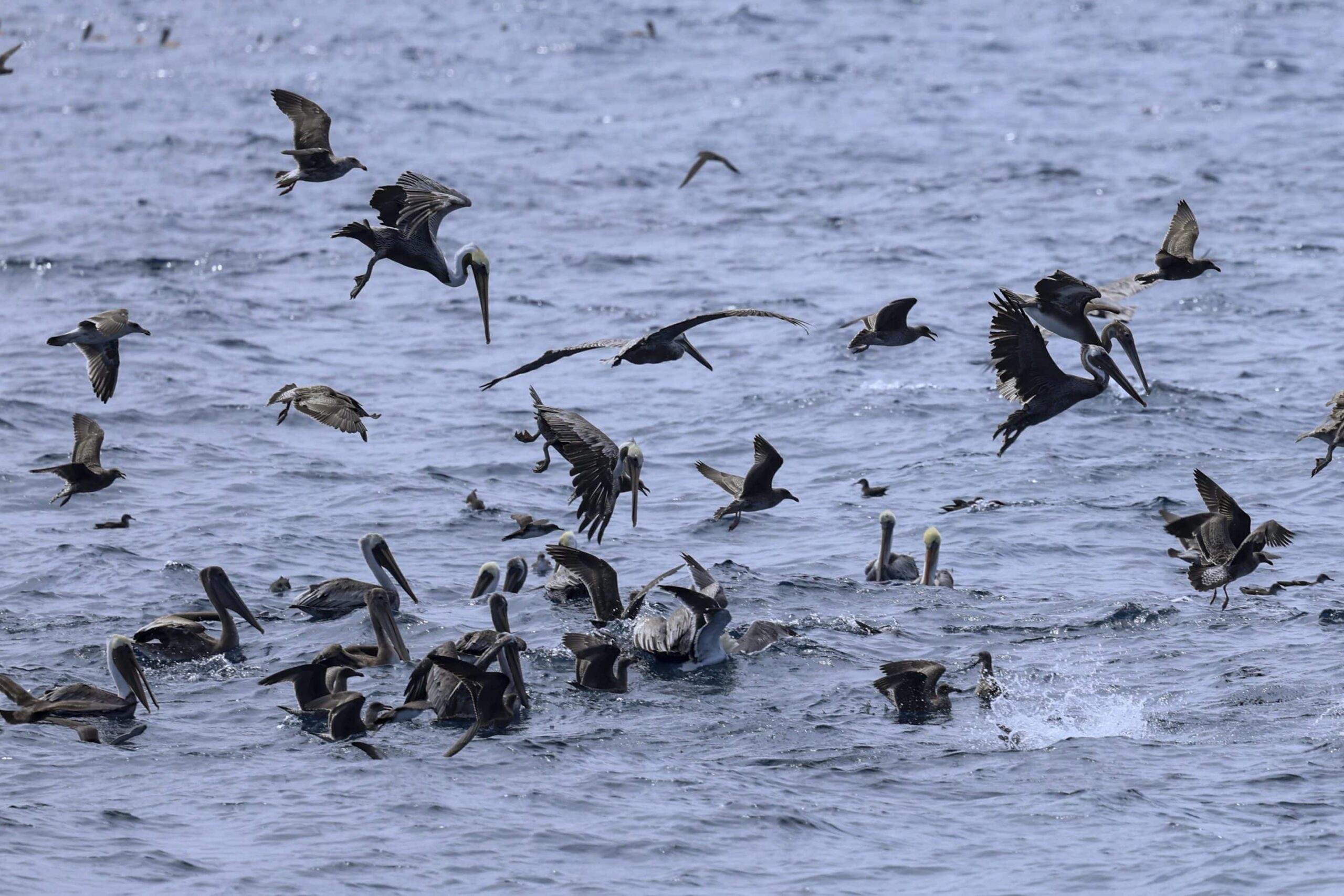
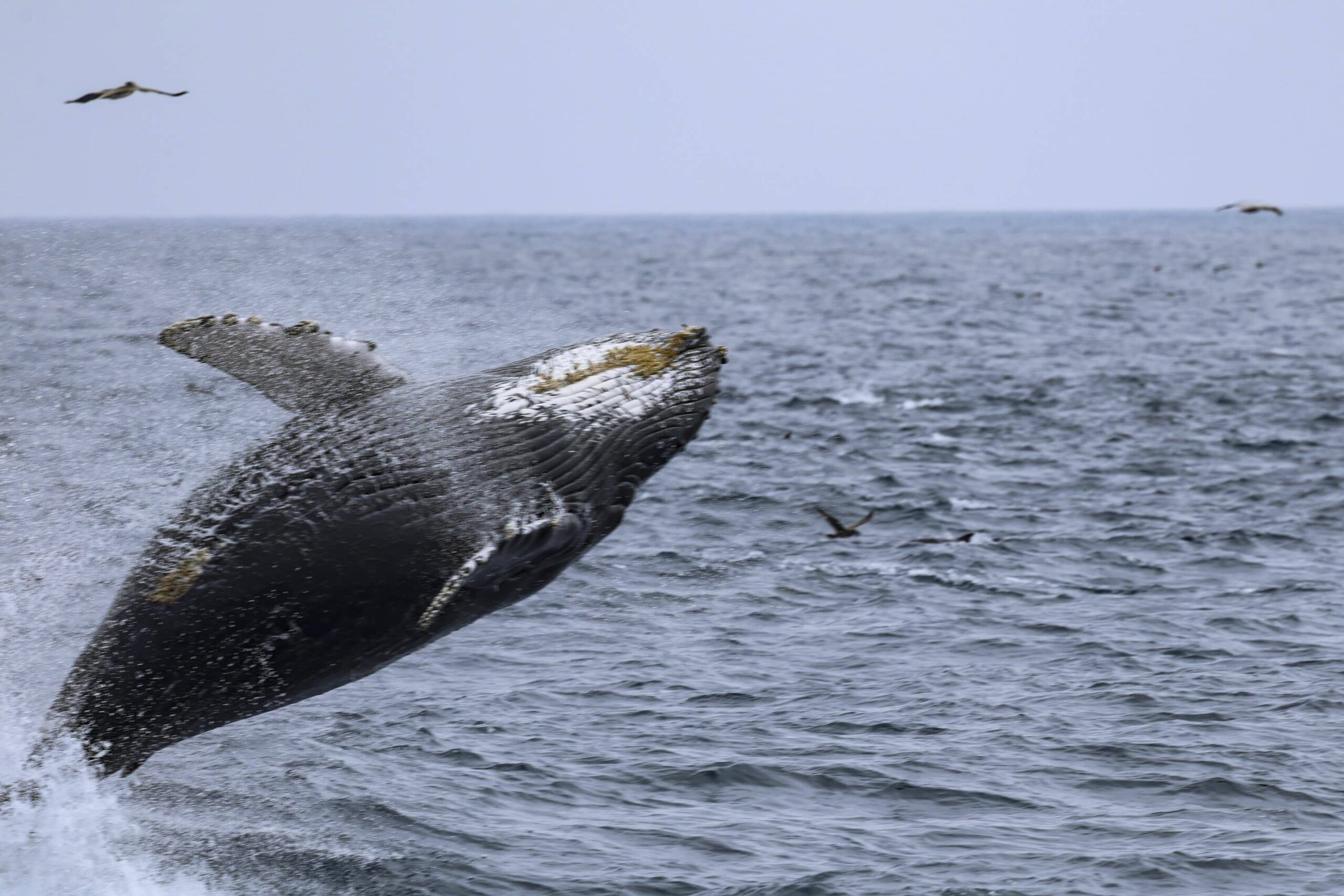
Once we got past the jetties and into the Pacific Ocean, we saw the whitecaps, indicating a wind speed of 9–14 knots or 10–15 mph.  The larger the area that the wind blows across the ocean and the stronger the wind, the larger the swell.  Fetch is a mariners term, along with port/starboard, bow/stern, etc.  Captain Bryan brought us northwest, off of Point LaJolla.  We found one pod of 150 common dolphins and could see more splashing two miles away on the horizon, just 5-miles from the Cove and Scripps Institution of Oceanography.  This next pod was a super-pod.  We had at least 1800 toothed whales, the long-beaked common dolphins cavorting and foraging and porpoising out of the water, churning up the seas.  We soon saw the blows of three whales, feeding in the same massive bait-ball area, about 1-mile long and a quarter mile across.  We saw the two fin whales spouting and their distinctive, prominent dorsal fin.  Then the humpback whale, and sure enough, it breached, creating a tremendous splash and entertaining the hooting and hollering passengers.  What an epic trip seeing so much fecundity, a tremendous biodiverse food web of sea lions, dolphins and two types of whales.  —Biologist Greg McCormack
Previous Sighting
Next Sighting

Olivia Trahan

Olivia is a senior pursuing her B.S. in Marine Biology at the University of North Carolina Wilmington, and brings extensive experience in marine mammal research, stranding response and science communication/outreach. Olivia works with the UNCW Marine Mammal Stranding Program back home, assisting in responses and necropsies of stranded marine mammals along the NC coast. Additionally, she is completing her thesis in the Ramirez Population & Food Web Ecology Lab, characterizing loggerhead sea turtle growth rates through aging their bones (like counting growth rings on a tree)! Most recently, she served as a Soundwatch Intern at The Whale Museum in Friday Harbor, WA, where she patrolled both U.S. and Canadian waters aboard a small research vessel, collecting data on vessel activity and killer whale behavior, conducting public outreach on and off the water, and educating boaters on how to reduce disturbances to the critically endangered Southern Resident killer whales. In her free time, Olivia enjoys wildlife photography, herping, crocheting, birding, hiking, drawing, and playing guitar. She is excited to bring her energy, field experience, and passion for conservation to the SDWW team as both Naturalist and Deckhand!