Captain Bryan brought the M/V Inspiration out just a few hundred meters for our first wildlife sighting of the day, a haul-out of California sea lions on the end of the privately owned floating bait dock and the yellow mooring ball.
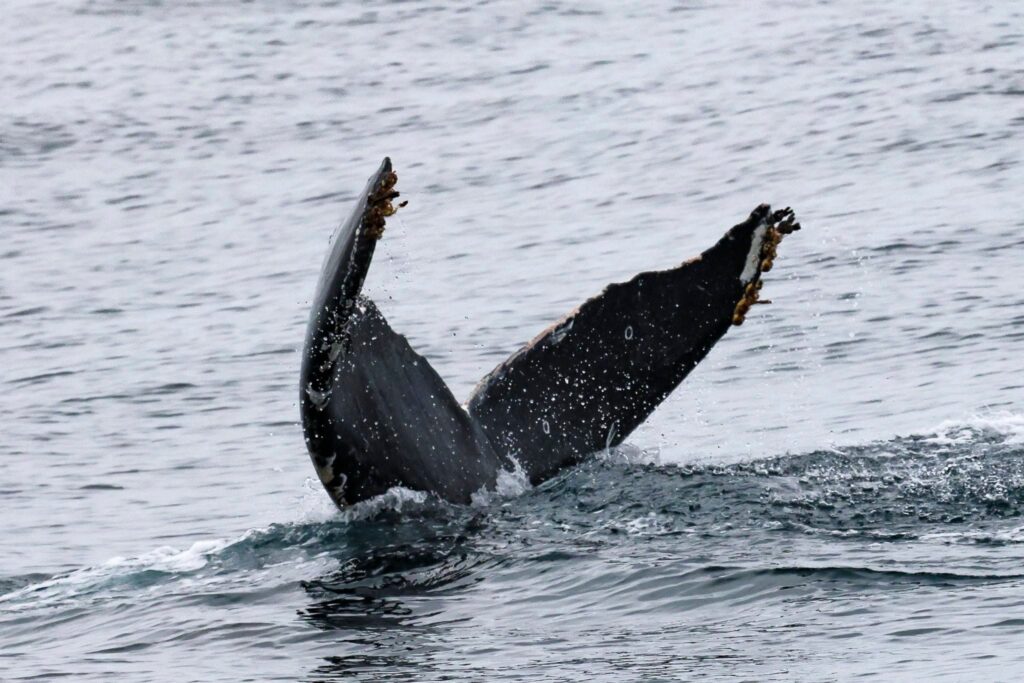
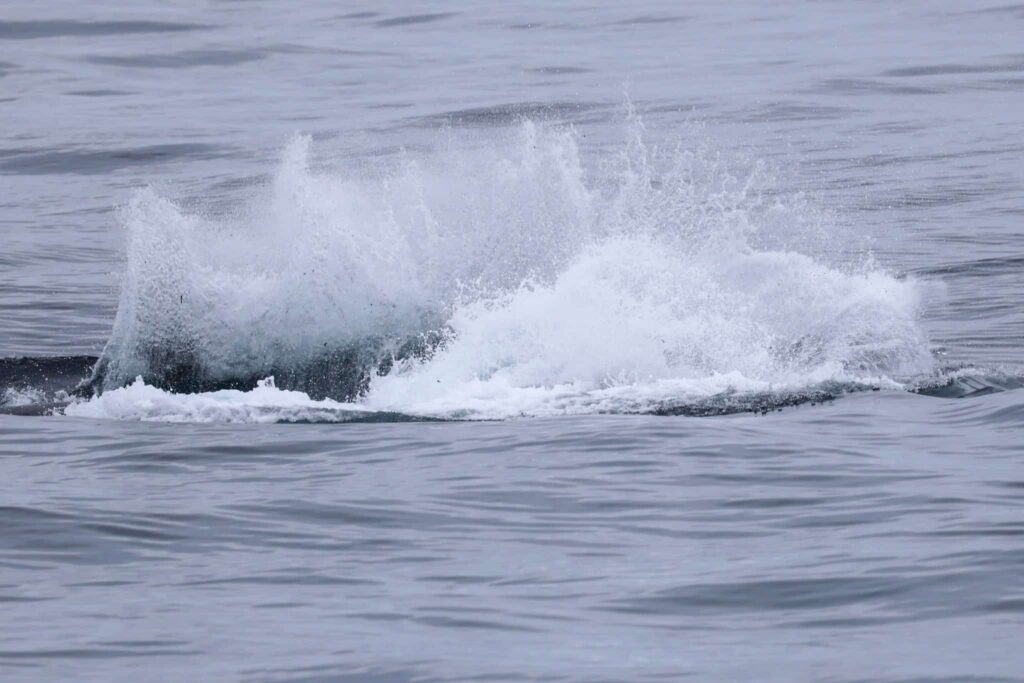
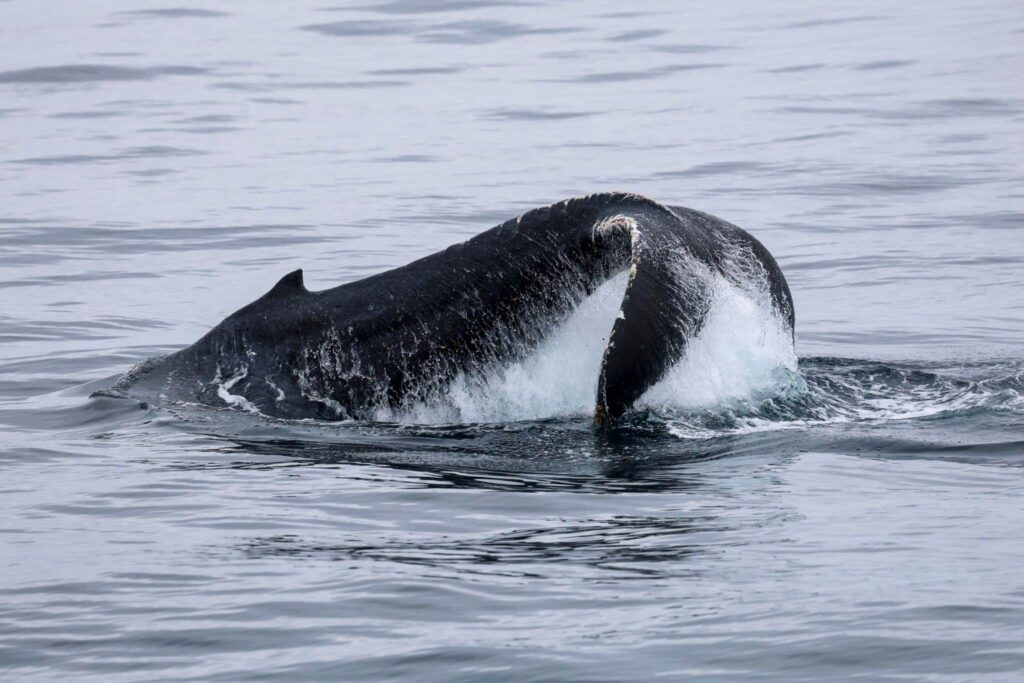
Just 2 nautical miles beyond the north and south jetties, we had a migrating humpback whale heading south toward Mexico. It looked like a 2-year old sub-adult, a bit emaciated with floppy flukes shown on its short duration dives. It exhibited some cool behaviors, such as tail throws and lob-tailing. We did lose over 7000 North Pacific humpback whales during the last big marine heat wave. SST or sea surface temperatures increased dramatically by several degrees. Warmer water inhibits biological productivity and leads to nutritional stress in predators such as the humpback whale and the California gray whale, the latter suffered a UME or unusual mortality event over the last several years, leading to a 40% reduction in the population of Eastern Pacific gray whales. A dramatic uptick in the numbers of strandings was the main indicator that something was going on in the marine environment, hundreds of whales washing-up dead from Mexico to Alaska, indication nutritional stress. Less food, means more searching, less fat accumulation and starvation.
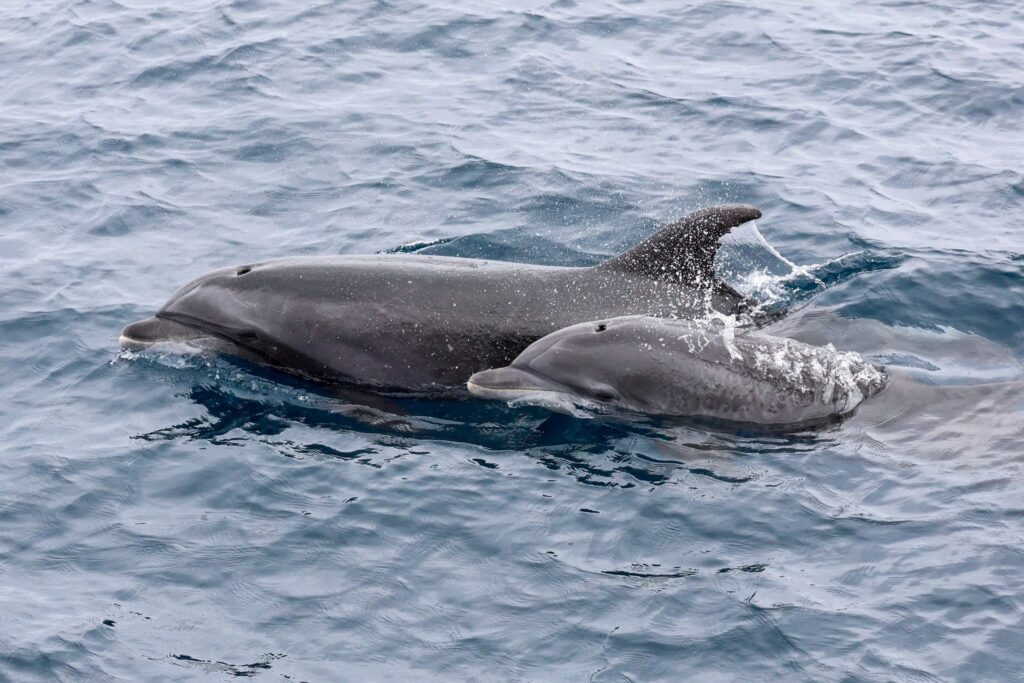
We found a pod of about 30 Offshore bottlenose dolphins. They are powerful swimmers and are one of the larger members of the dolphin family. They are the archetype, meaning they represent the dolphin family with the conspicuous falcate or curved, crescent-shaped dorsal fin. They have the bottlenose shaped proboscis or beak and inside the mouth are the cone-shaped, pointy teeth. Porpoises have flatter, spade-shaped teeth, triangular dorsal fins, are generally smaller and less social than the dolphins and belong in a different family.
On our way back, we came across a pod of about 220 long-beaked common dolphins foraging about two miles west of the Mission Bay Channel entrance. We enjoyed their playful demeanor, as they came up to our vessel and surfed our wake and jockeyed for position off of our bow where our moving vessel provides a pressure wave. The dolphins get the “free ride”, without the need to move the caudal peduncle and tail flukes up and down to propel forward. The sun also came out. We were beneath the marine layer for most of our trip.
On our afternoon trip, Captain Austin found a pod of around 300 long-beaked common dolphins just west of Point Loma and the Department of Interior managed site known as Cabrillo National Monument.
We continued south to where we had the coordinates for a humpback whale that was seen just an hour earlier. However, the whale ended up in Mexico. We could see the spouts on the horizon from about 3-4 miles away with perfect lighting, but technically we could not cross the border without everyone having their passports. We turned back north and northwest and found a bait-ball, a large school of fish near the surface. We watched as the birds and dolphins participated in eating during this short-lived feeding frenzy in which all or most of the schooling fish were eaten. We enjoyed the antics of these powerful, graceful, elegant odonticetes or toothed whales. We have another trip coming up today, the 4:00 PM Sunset Trip and another full day tomorrow, so come on out and witness the amazing marine mammal spectacle. —Biologist Greg McCormack