



Every winter, San Diego Whale Watch looks forward to welcoming one of the most iconic migrations on the planet: the gray whales’ journey south to Baja California.
Our local season typically runs from December through April or even May, depending on the whales and their timing. As we get ready for the first spout of the 2025–2026 season, let’s revisit the highlights (and surprises) from last year.
A Wonderful Season With 129 Gray Whales Spotted
Last year’s gray whale season (Dec–May) brought 129 individual gray whale sightings, making for a beautiful and memorable migration.
It wasn’t a record-breaking year—but it was filled with special moments: whales cruising tight to the coastline, curious juveniles checking out the boat, and those unmistakable flukes lifting in the winter sun.
Our first gray whale of the season arrived on December 13, 2024, officially kicking off months of unforgettable encounters.
Not Many Mom–Calf Pairs: A Concerning Trend
One thing stood out last season:
We didn’t see many mom–calf pairs.
And we weren’t alone. Reports across the Pacific confirmed that gray whale births were far lower than expected this year as well.
According to NOAA, this trend connects to a larger concern: the Unusual Mortality Event (UME) affecting gray whales from 2018 to 2023. This event documented hundreds of strandings and correlated declines in overall whale health.
Researchers believe these issues stem from:
- Climate change
- Shifts in Arctic feeding grounds
- Reduced prey availability
- Malnutrition that impacts both survival and reproductive success
Low birth rates are one of the clearest indicators of how environmental changes echo through the entire population. While numbers have stabilized somewhat since the peak of the UME, gray whales are still in a recovery period.

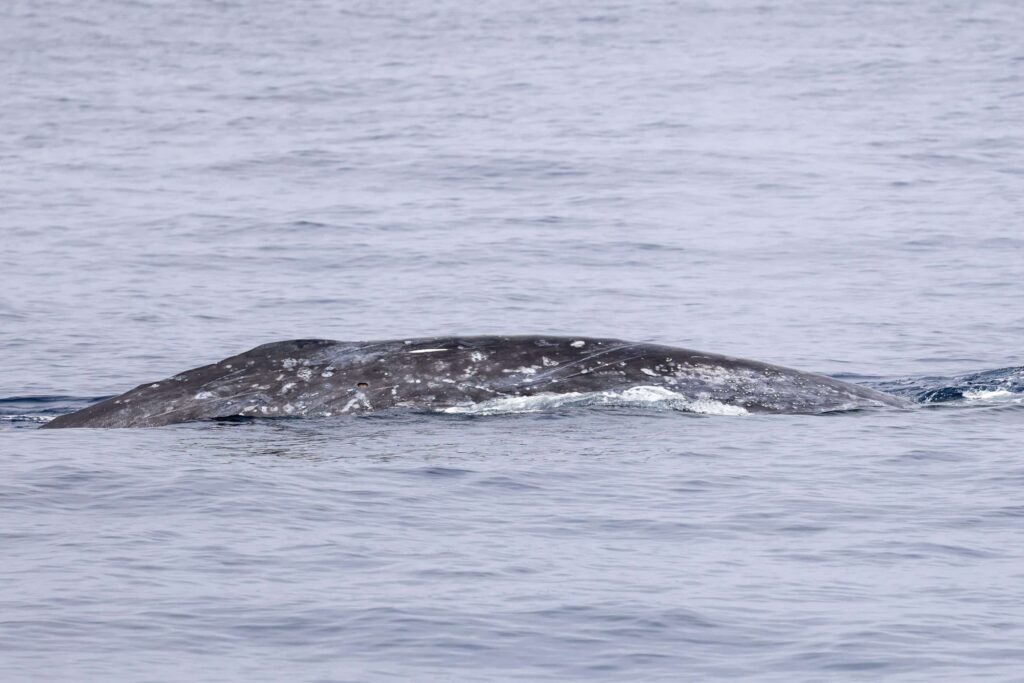
Then Things Got Strange: Summer Sightings!
Gray whales typically pass San Diego from December through early spring.
So imagine our surprise when we began spotting them in the summer!
This year we recorded:
- 2 gray whales in June
- 2 in July
- 1 in August
Seeing five gray whales in summertime is extremely unusual. Scientists suspect this could be linked to shifting ocean conditions, but regardless of the cause, these sightings added a layer of mystery and excitement to our year.
How Many Will We See This Season?
With last year’s total at 129 whales—and the unusual summer visitors surprising our crew—we can’t help but wonder:
How many gray whales will we see during the 2025–2026 migration?
Only the whales know… but we’re ready to greet every single one.
Enter Our Annual Gray Whale Prediction Contest on Instagram!
To celebrate the start of the season, we’re bringing back one of our favorite traditions:
🎉 Guess the First Gray Whale of the Season!
Here’s how to join:
Visit our Instagram and find the contest post.
Comment with your prediction for the first day we’ll spot a southbound gray whale and tag a friend that you’d like to come with you!
Follow along—we’ll announce the winner as soon as the first whale appears!
These southbound whales are heading toward the warm Baja lagoons, where pregnant females will give birth and raise their calves. Watching this migration unfold is truly a privilege.
Join Us on the Water This Season
Gray whale season brings beautiful seas, cool weather, and amazing marine life—and every year is unique.
If you’ve been thinking about joining us, this is one of the best times of year to experience San Diego’s wildlife at its finest.
Spots fill quickly, especially once the migration starts.
