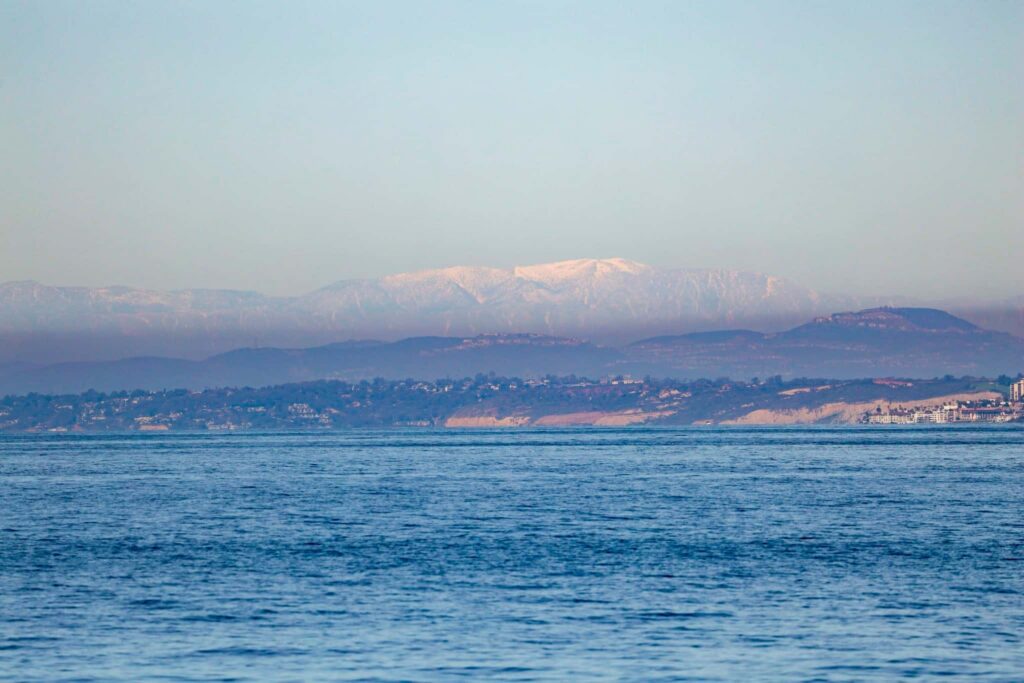
The last day of February was unseasonably warm for all of us, feeling a bit like summer in the winter time. On our afternoon trip, we had incredibly calm seas and great visibility. We went way offshore, around 8-miles, searching the horizon near and far for the migrating Gray Whales. In late February, we typically see 90% or more whales heading north, back to the summer feeding grounds in the Arctic. Maybe 10% of the population is still heading south.
The migration past San Diego typically begins in mid-December for the southbounders, reaching a peak perhaps the first week of January. The peak northern migration typically takes place in the middle of March. The two main things the big, baleen whales do thoughout the year is 7-months of feeding in summer feeding grounds in higher latitudes, then they migrate to lower latitudes in winter for several months of socializing, courtship, mating and birthing after about a year-long gestation for the pregnant females.
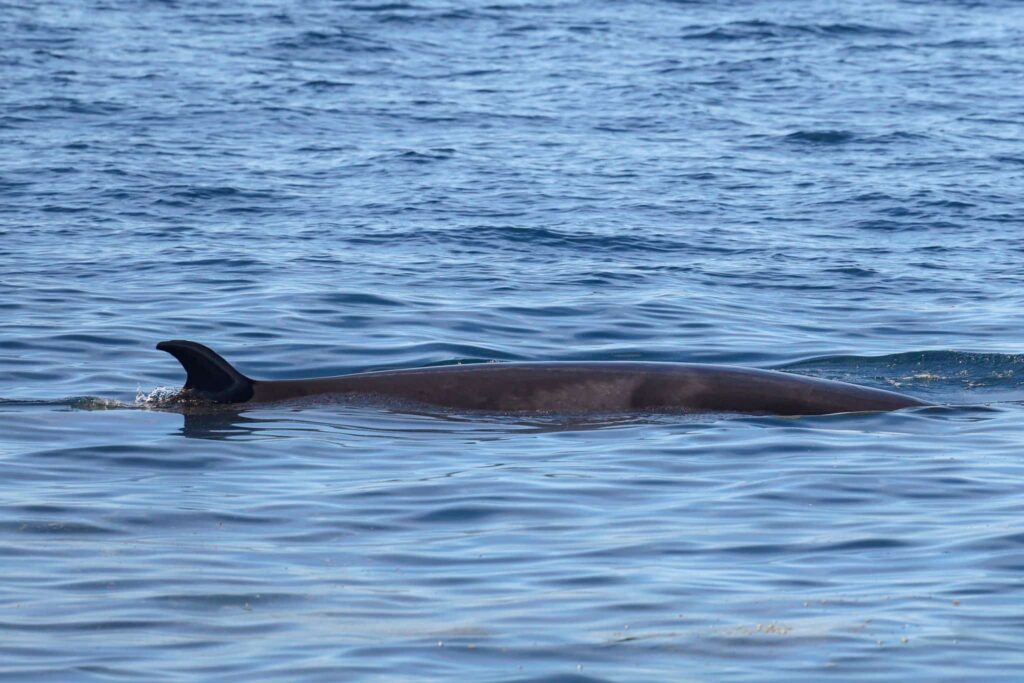
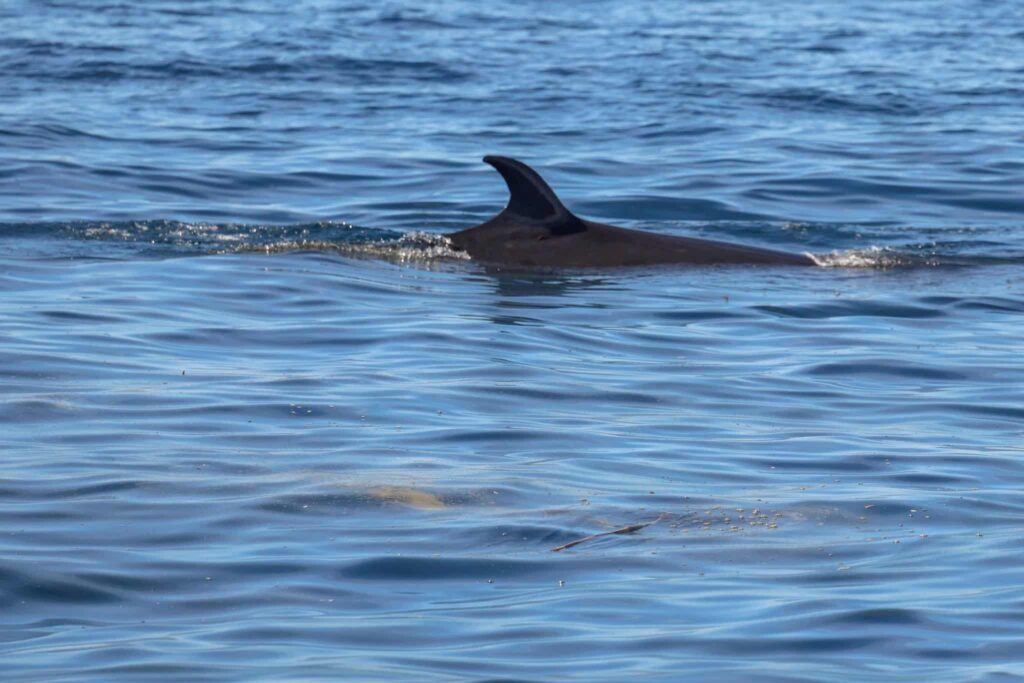
A few of our guests mentioned seeing something come up to the surface. Captain Brian decided to slow down and investigate. Sure enough, after a couple of minutes, we could see and we could even smell the breath from two Minke whales. Some might say “stinky Minke” because of the smell of the breath, like decomposing fish.
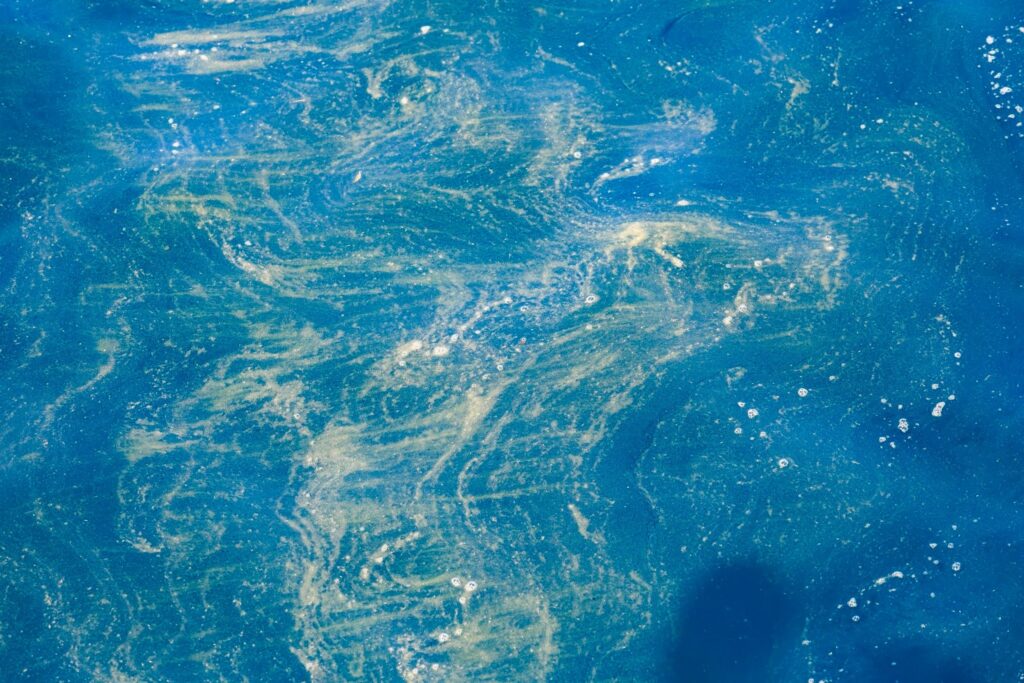
We saw both of the Minke whales working the eddy-line in about 1,400 feet of water. We could see the golden-brown algae, likely a massive diatom phytoplankton bloom, in swirls at the surface, like surface scum, spindrift or spine. These whale feed on the phytoplankton consuming zooplankton that in turn feed the small forage fish, such as the sardine and anchovy.
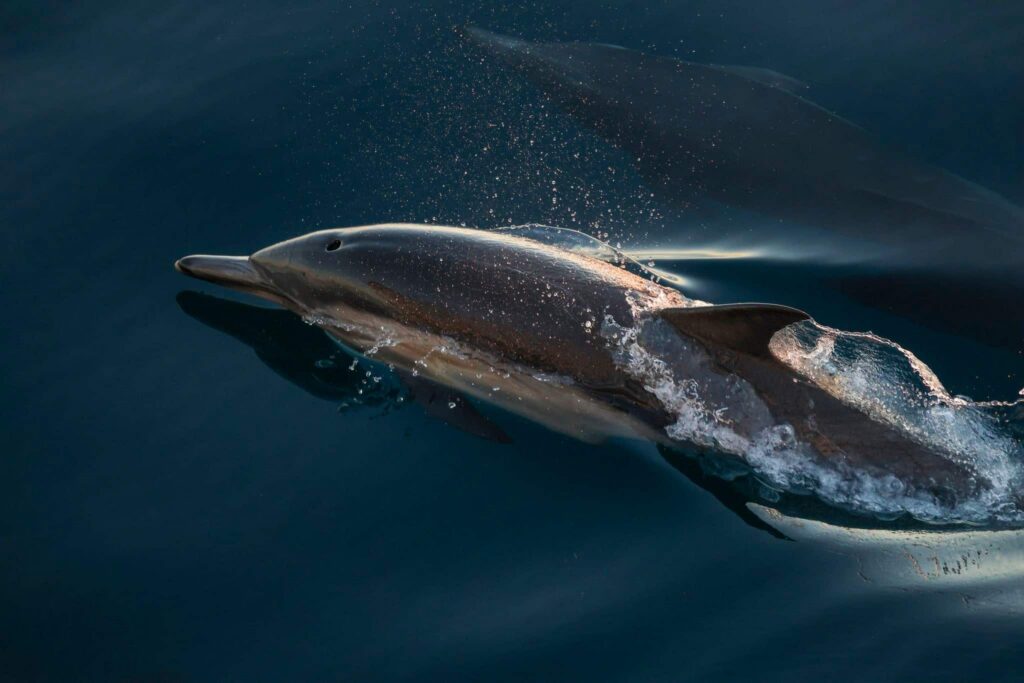
On our sunset trip, we got way offshore and caught-up with our sister vessel the M/V Inspiration. We could see whale spouts from more than a mile away, but when we got to the area where they were last seen, the whales disappeared. They may have surfaced in the bright sun-lit seas going west. It is rare for us to lose whales on such a clear, calm day. The good news was that our keen-eyed passengers indicated to deckhand Joaquin that they saw some splashes. We investigated and for the next two miles were blessed with some great views of the short-beaked common dolphins. Most of them, around 300, were foraging, however a few came up to our boat to ride our bow wave and surf our wake.
We had a clear horizon for the “green flash”, the atmospheric phenomenon that we witness from time to time when the tip of the sun turns green due to refraction of the light through the atmosphere, so, from red, orange, yellow, we get green, seen on the tip of the sun as it disappears below the horizon. A waxing gibbous moon was in the eastern sky and we enjoyed the twilight ride back to the docks. -Naturalist Greg McCormack