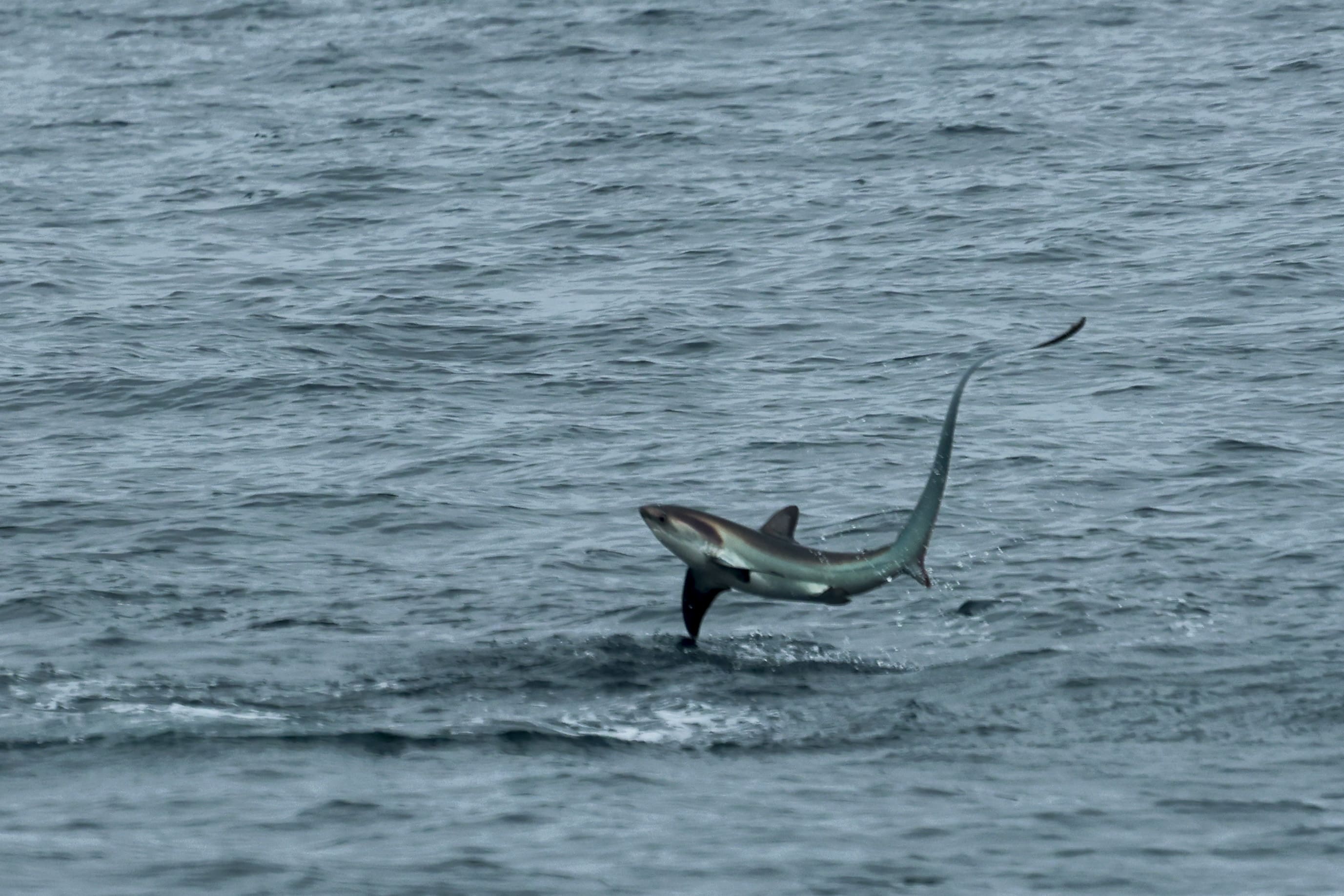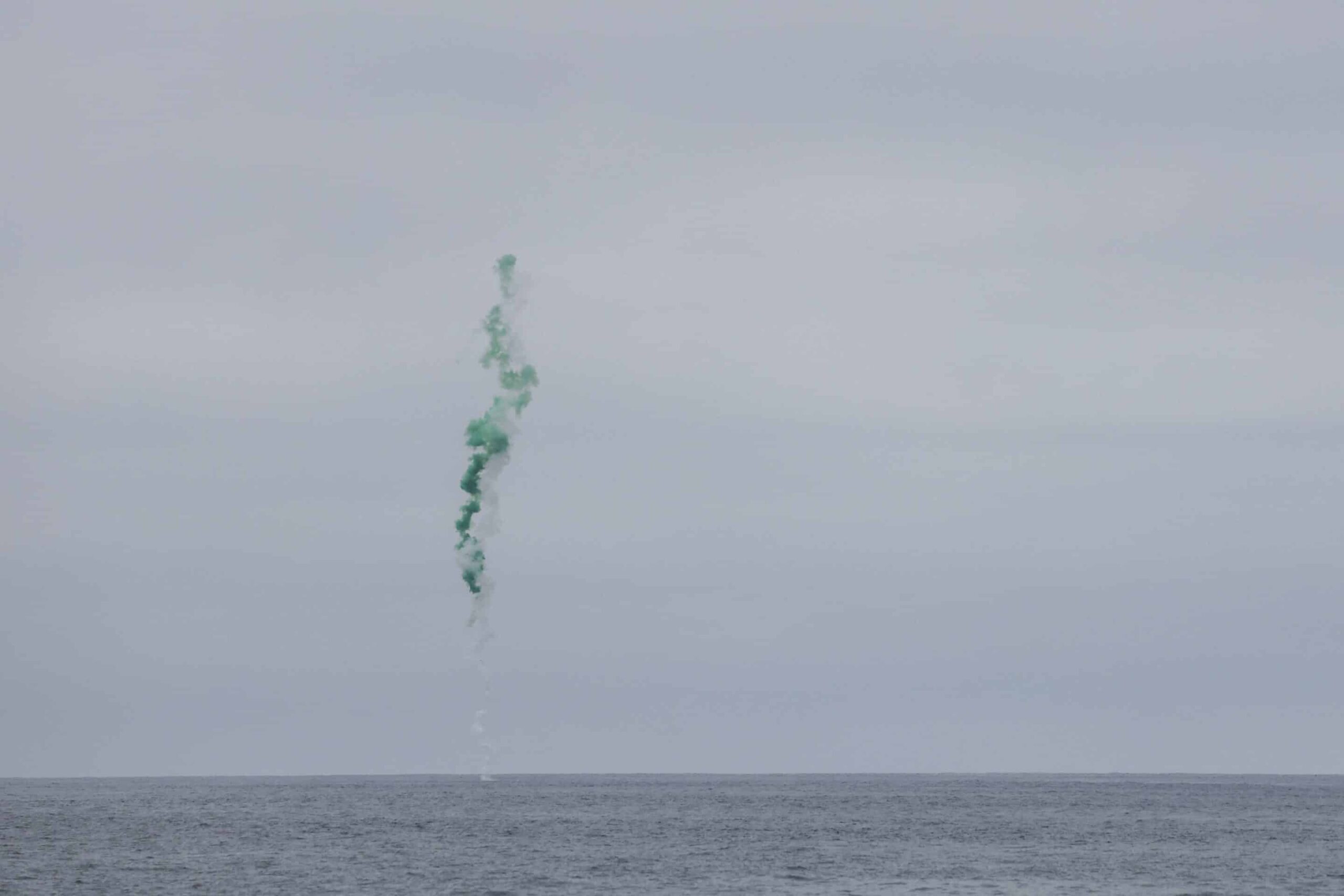
Just two miles beyond the Mission Bay Channel entrance, our skipper Captain Bryan, mentioned a shark breaching. Lucky for us, it breached 8 times. Bryan yelled: “How lucky are we to see a Common Thresher, Alopias vulpinus, breach multiple times!” I was able to get about a half-dozen decent photos of this shark with the extremely long upper tail fin, which they use to stun their play. The thresher is considered harmless to human and are typically quite shy. An unusual sight was a green flair that exploded a couple of miles to the south, a military flare used to announce the shooting of a torpedo or military practices.
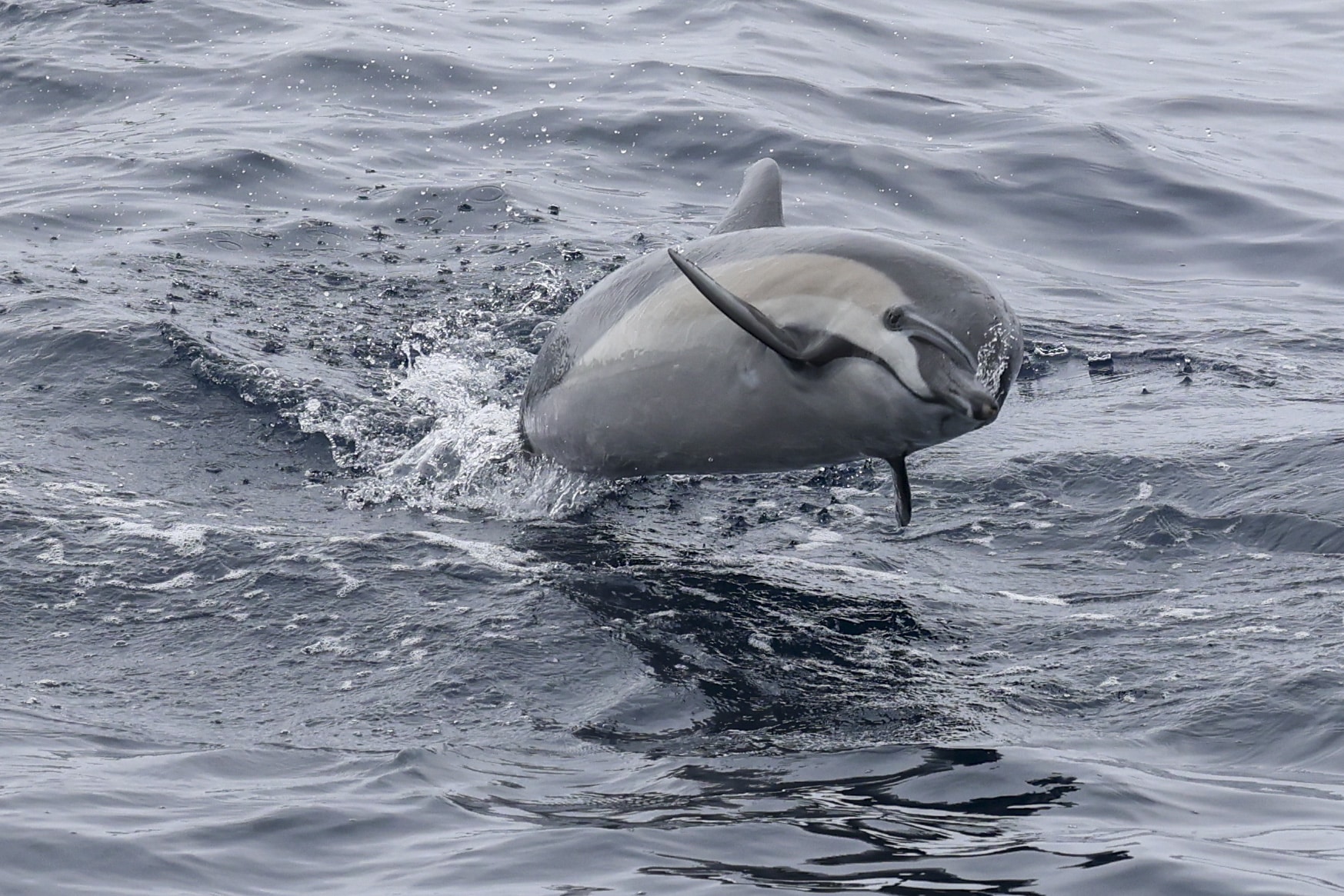
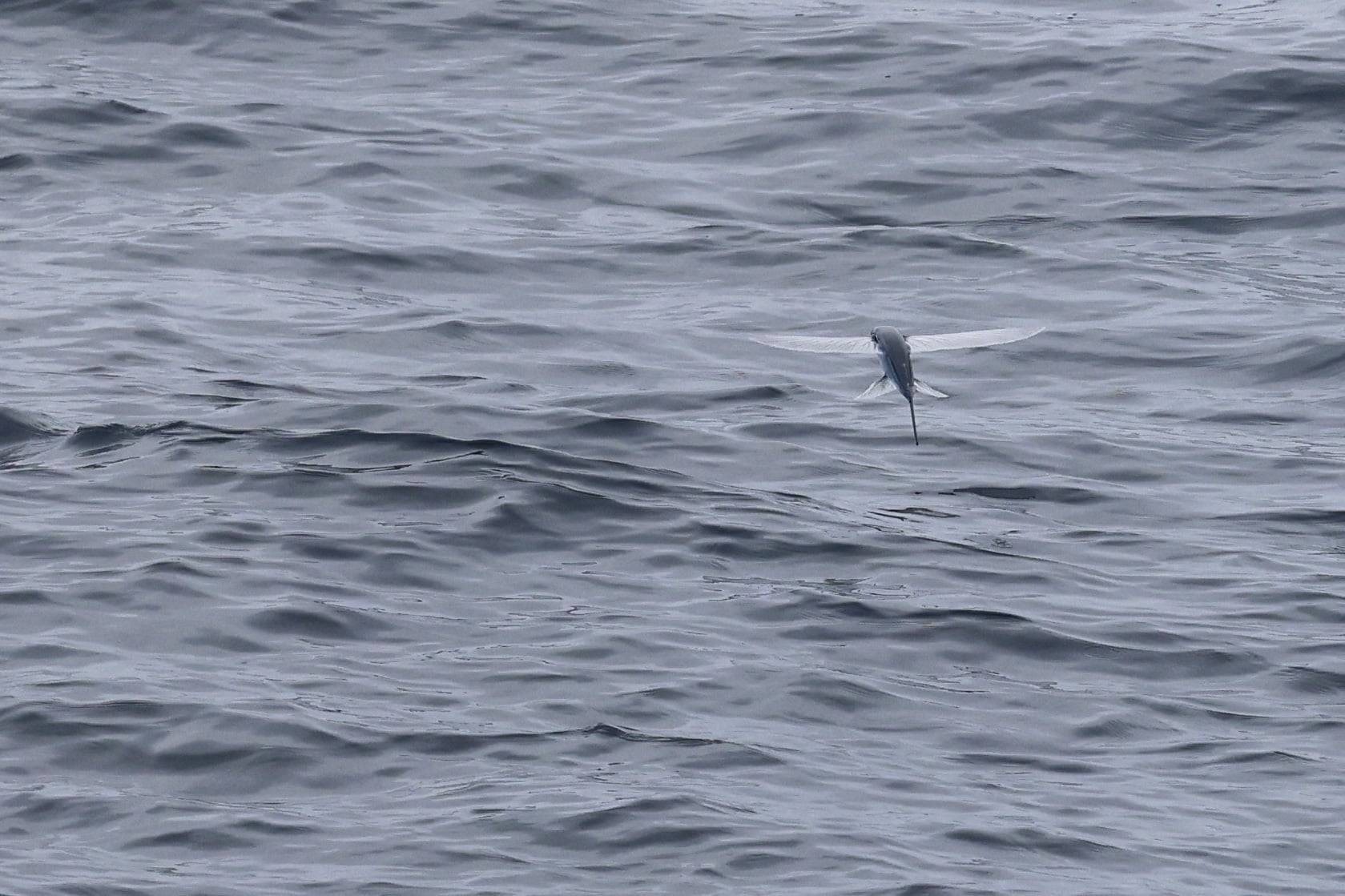
We had a few passengers spot a a flying fish and soon after a Mola mola or ocean sunfish at the surface. The sunfish can become the heaviest of the boney fishes, weighing up to 2000-pounds and getting as big as a barn door. They prefer to consume jellies. Once we got into deeper water, our expert spotters found us a pod of 800 Long-beaked common dolphins (LBCD’s) heading south. After a few minutes, the entire pod turned around and started heading north, which was nice as we were heading toward the northwest. We almost got up to Del Mar, in the area of the Scripps San Diego submarine canyon and just before turning around, we found another 400 or so LBCD’s, many of them coming up to our bow on the dolphin equivalent of a “human watching tour”. They like to ride the pressure wave in front of the bow and surf our wake. The sun popped out from the marine layer and all was sunny as we made our way back into the channel entrance. We spotted an Osprey on the north jetty on the green navigational aid. Hope to see you soon on a whale watching wildlife tour. —Biologist Greg McCormack