We had reports of a rare sighting, that of the Eastern Tropical Pacific Killer Whales, and so we headed south to try and find them. We passed Sunset Cliffs, Fort Rosecrans National Cemetary and the lighthouse at Cabrillo National Monument, near the entrance to San Diego Bay and the huge US Navy presence. We could see the curved Coronado Bridge and on Coronado Island, the famous “Hotel del Coronado where the comedy film “Some Like it Hot” with Marylyn Monroe, Tony Curtis and Jack Lemon starred back in 1959.
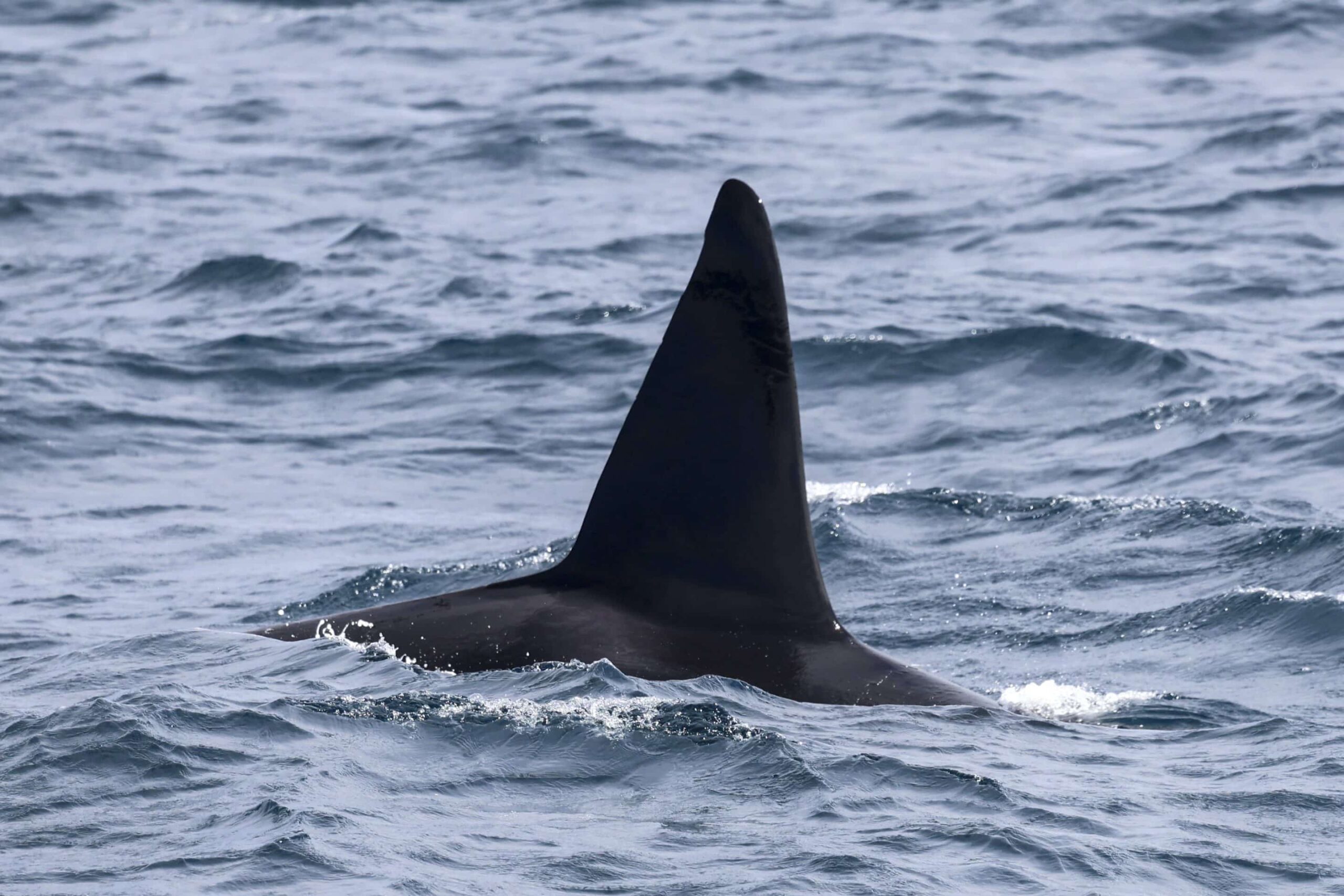
Captain Michael took us further south than we’ve ever been before. It took awhile, but we were greatly rewarded with the oceans top predator, the Killer Whales. In this case, we had the Eastern Tropical Pacific transient ecotypes, meaning they are primarily mammal eaters. These killer whales are not really well known, as they typically inhabit the waters off of Mexico and Central America. We might see them once or twice a year. We saw 7 of the 12 that were seen on the morning trip. My friend Alisa Shulman-Janiger knows these whales as well as anyone. She was a co-author of the 1997 book “The Killer Whales of California and Northern Mexico” with Nancy Black, Richard Turnullo and a Mexican biologist/author. We had “Macho”, the male, with the 6-foot tall dorsal fin and another male, Diego. We likely had Hembra, a female with a tiny notch in her dorsal fin. These whales started heading south quickly and were engaged in a predation event, hunting common dolphins. We did see a bit of celebration, a tail lob and a few gulls flying down to pick up pieces of blubber from a carcass. We raced back home and were about 30-minutes late, but well worth it as we only see these whales once in a blue moon.
On our sunset trip, we headed southwest, looking for great sightings and came across a mega-pod of long-beaked common dolphins, tightly swimming northwest, about 1500 of them porpoising. We had amazing views with perfect light. Later, we saw two spouts on the horizon and after a long journey out toward the southwest, we were rewarded with two adult humpback whales synchronizing their swimming and diving, from 5-8-minute dives. We did see the tail flukes of one of the whales and had a really nice sunset on the way back to port on a very dark New Moon night. Just two more days of summer, the the official autumnal equinox, everybody. Hope to see you out on a whale watch soon. Biologist Greg McCormack