On our afternoon trip, we went out through the slightly bumpy Mission Bay Channel entrance and went northwest through some fog for 7-miles, traveling close to the deeper “Coronado Escarpment” or 9-Mile Bank. Out here there is more food, including the phytoplankton and zooplankton such as krill. These are fed upon higher up the food chain, an oceanic food web in which many animals eat each other.
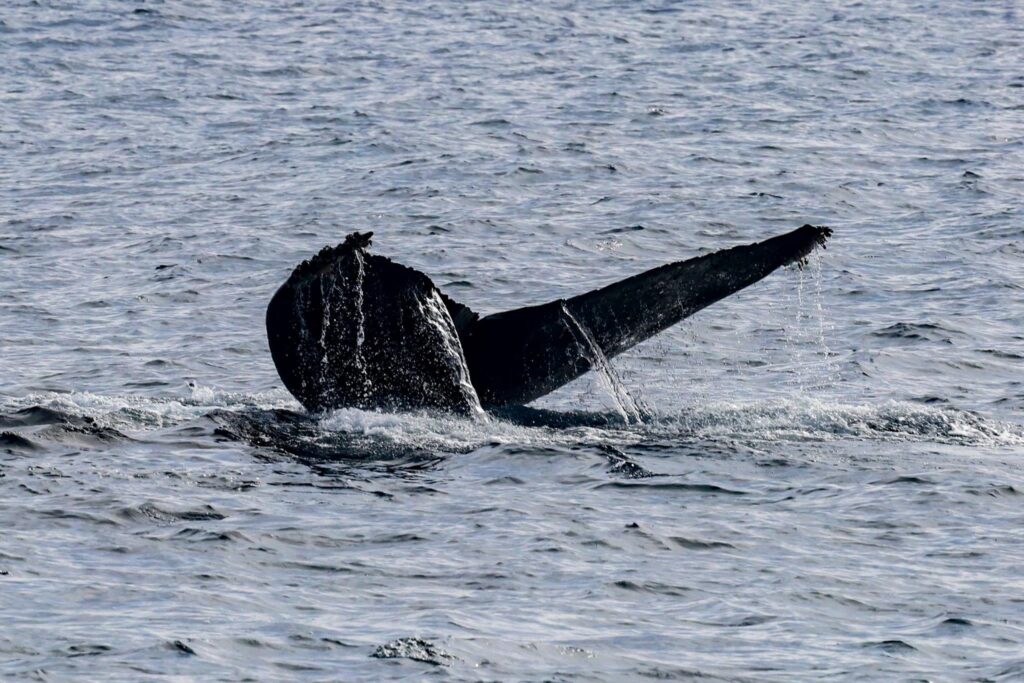
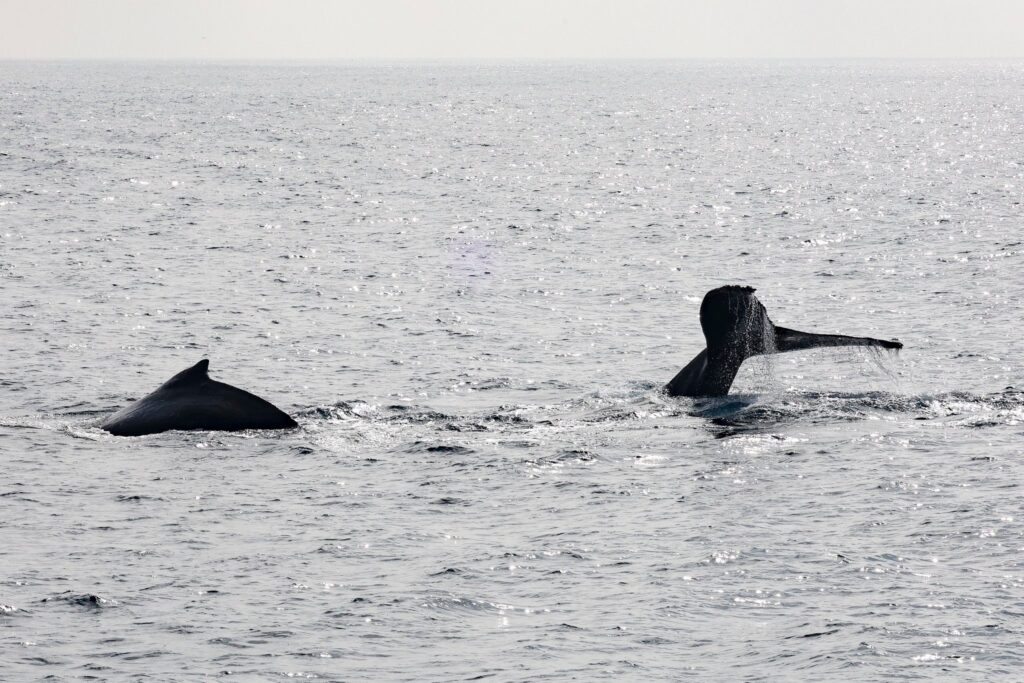
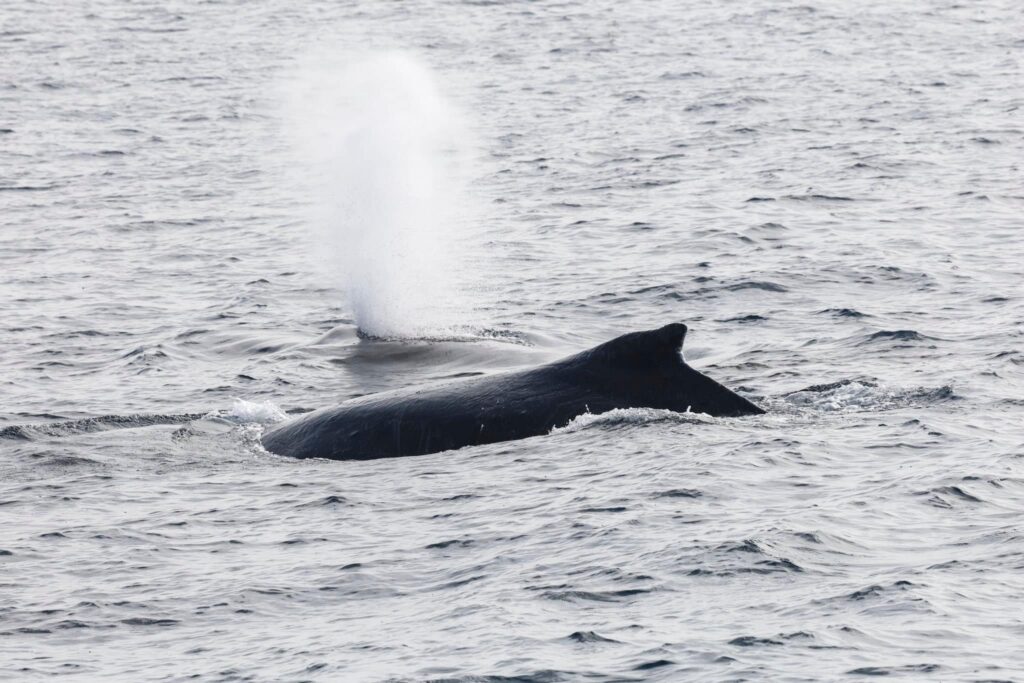
After the fog cleared, a couple of our guests said they saw something, which is always worth investigating, so we slowed down. After a few minutes, that “something” turned into a humpback whale, then two whales, and then three surfacing at once! Later a fourth humpback was seen in the group. The fourth humpback whale had a different dive profile and wasn’t doing the synchronized swimming and diving of the other three whales. We followed them for quite some time and noticed they were only staying down two minutes and traveling at around 5 knots or so.
Humpbacks can easily do 100-miles a day during their migration from their higher latitude summer feeding grounds in temperate waters down to the winter breeding grounds in warmer, sub-tropical waters. In this case, we likely had the Mexican DPS or distinct population segment, one of 14 DPS’s found around the world in the northern and southern hemisphere. These humpbacks are often born in the Bay of Banderas off of Puerto Vallarta and Socorro Island in the Revillagigedo archipelago about 200 miles south of Cabo San Lucas.
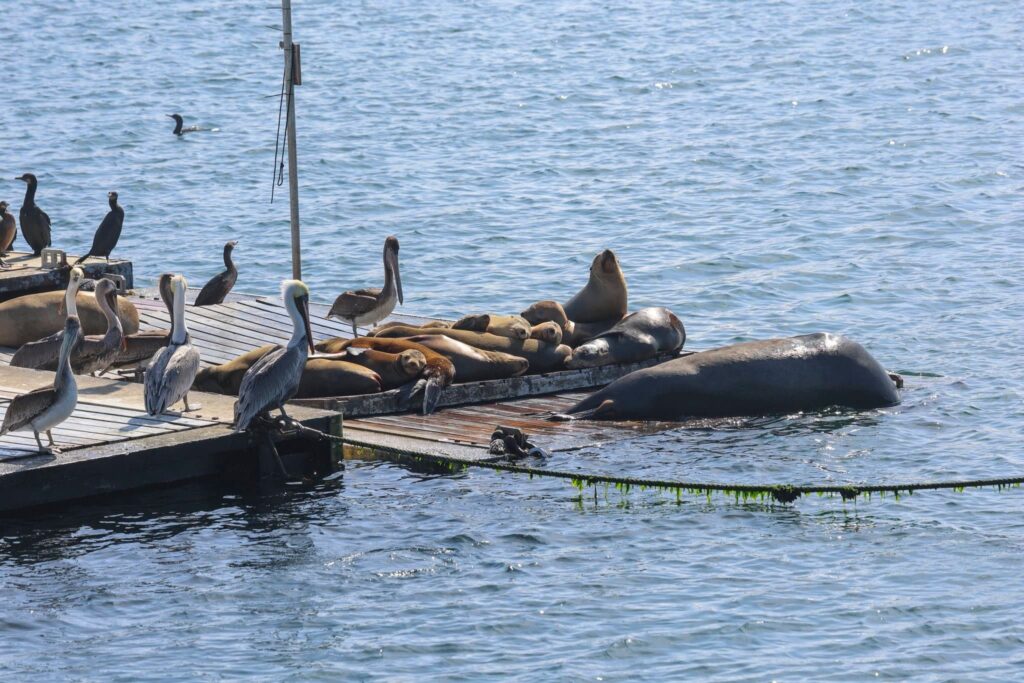
On our 4:00 PM Sunset trip, we had a few California sea lions showing us some interesting behavior, from resting, jugging, porpoising, cavorting and faux fighting at the start of our trip on or near the floating bait dock and the on top of the large, yellow mooring ball. These are gregarious, vociferous marine mammals that showed us a bit of jockeying for position and then taking a bit of a rest. They typically rest about 8-hours a day, about the same amount of time that humans like to rest.
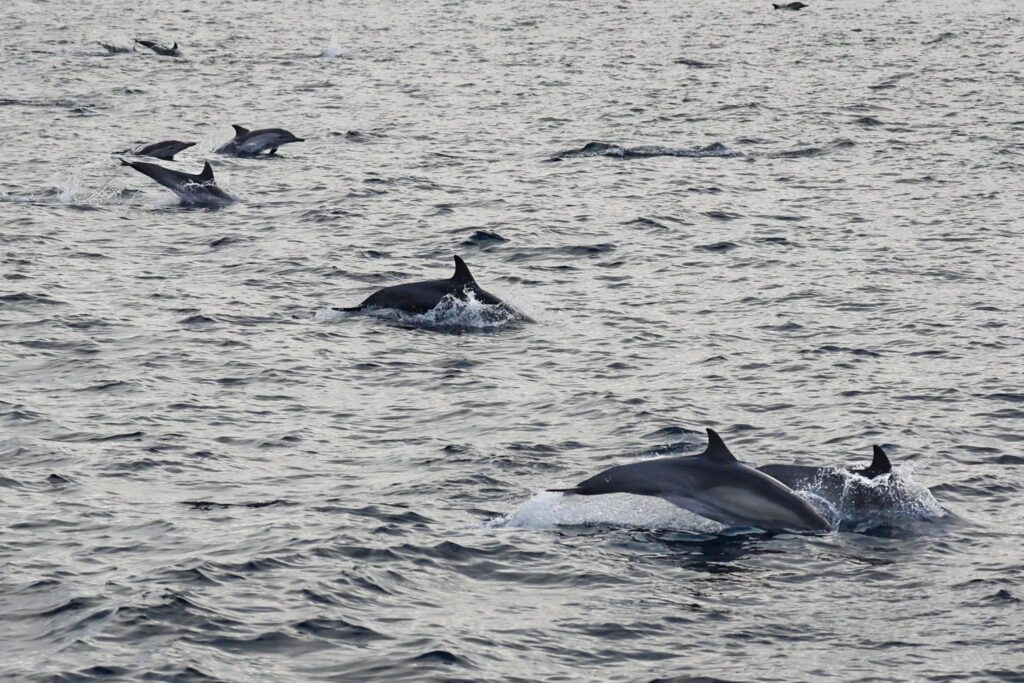
Further offshore, around 7-miles through the fog layer, we came across about 50 Long-beaked common dolphins foraging on small patches of schooling fish. Bait-balls of forage fish, such as the sardine and anchovy, was being consumed by many hungry mouths, including a few gulls and pelicans.
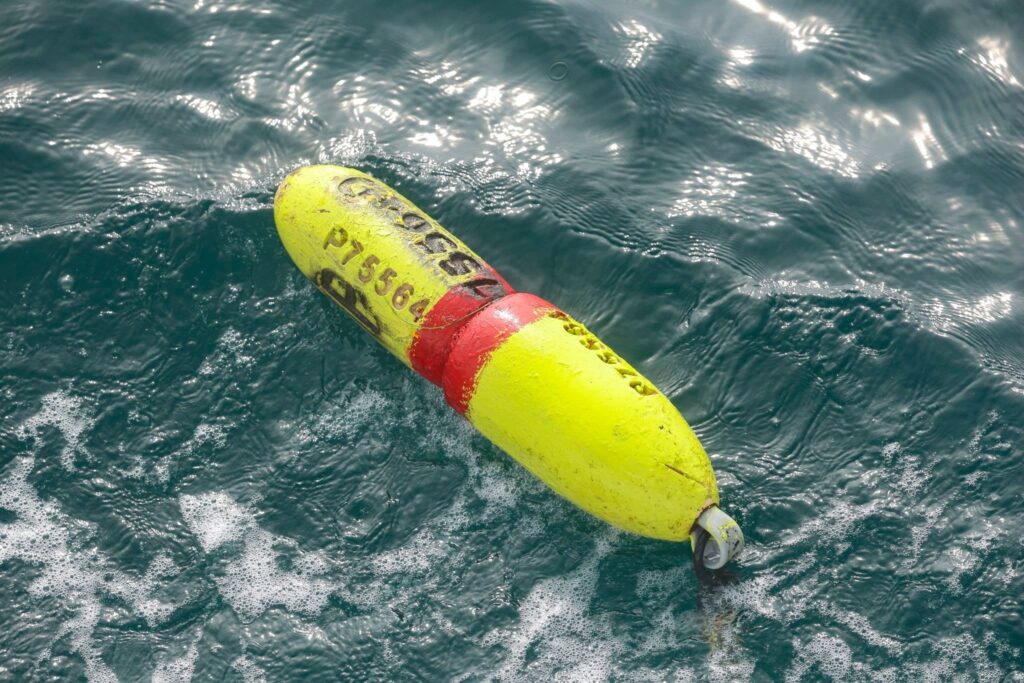
The sunset did not visually occur, officially at 6:03 PM, due to the thickening fog. We slowed down and sounded the fog horn a few times as we approached the Mission Bay Channel entrance. One last curiosity was seeing a dozen tiny blinking lights as we entered the channel between the jetties. We saw the blinking strobe lights and marker buoy strobes attached to the lobsters traps buoy line to make them visible to fisherman and the boats in the dark. The official start of the lobster season for commercial and recreational fishermen began at 12:01AM (midnight) on the first of October. The opening of the season occurs on the last Saturday before October begins. Hope you can make it on a whale watching wildlife tour soon, as there is always something amazing to see and witness. —Naturalist Greg McCormack