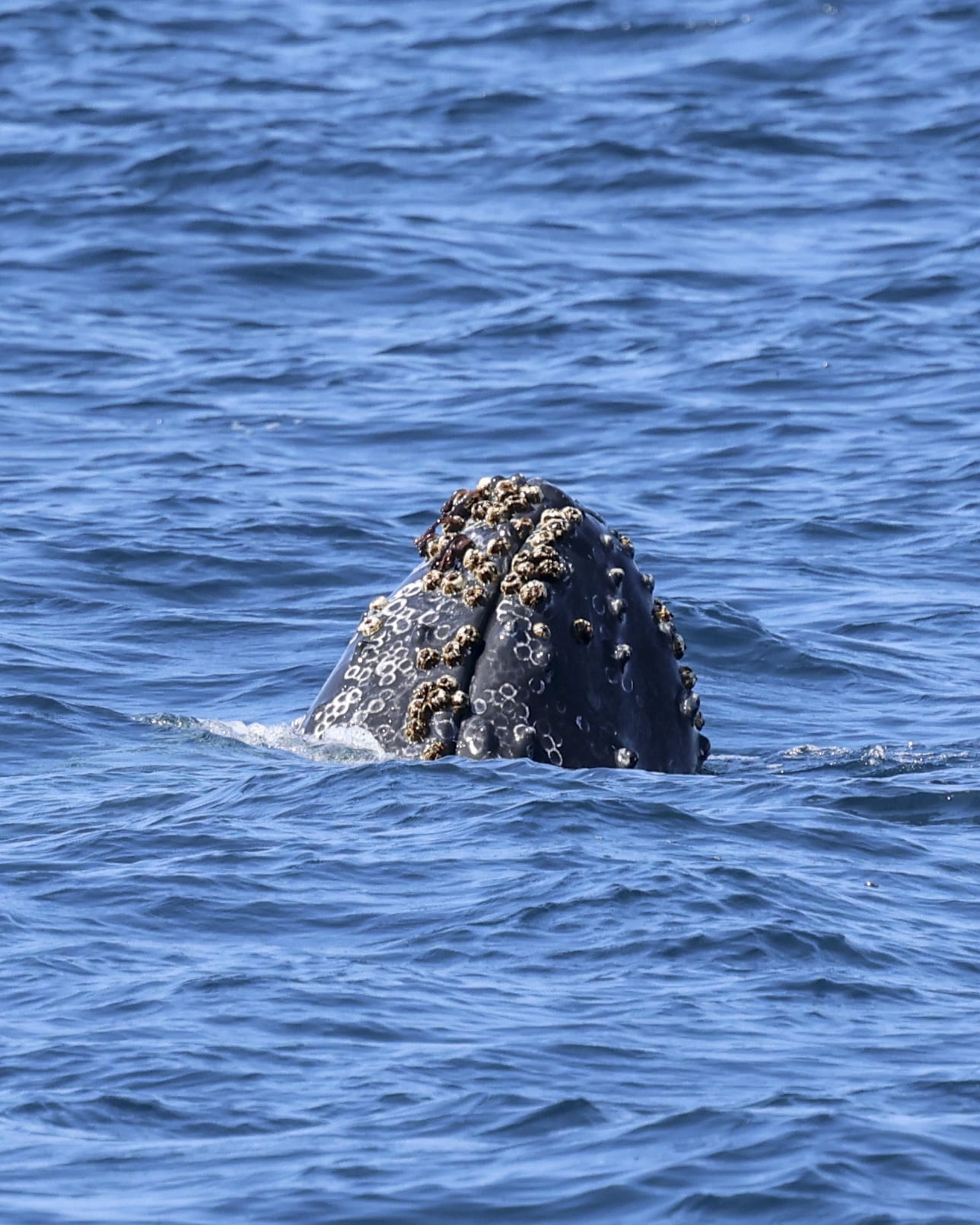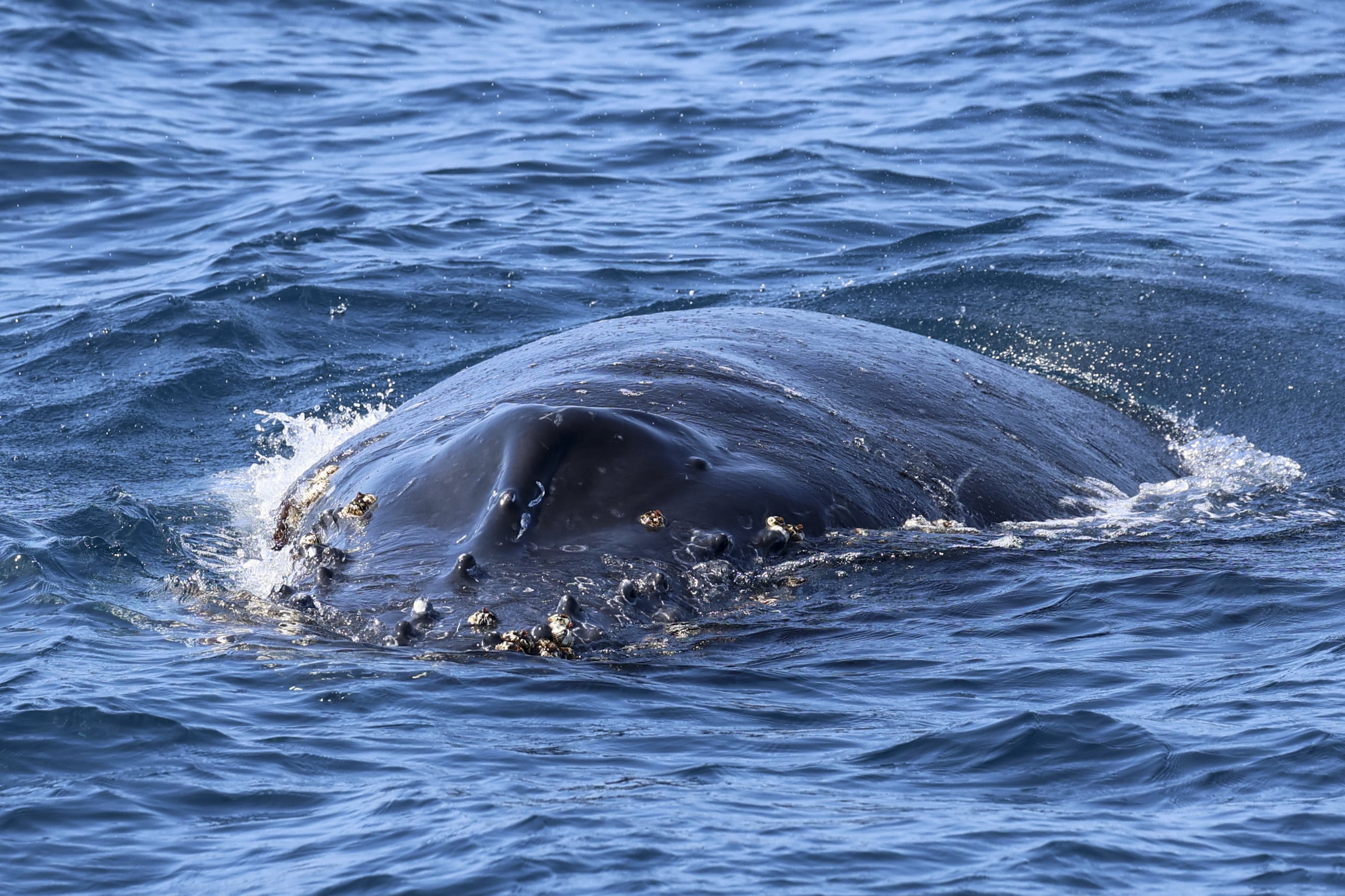
The afternoon trip had a humpback whale!
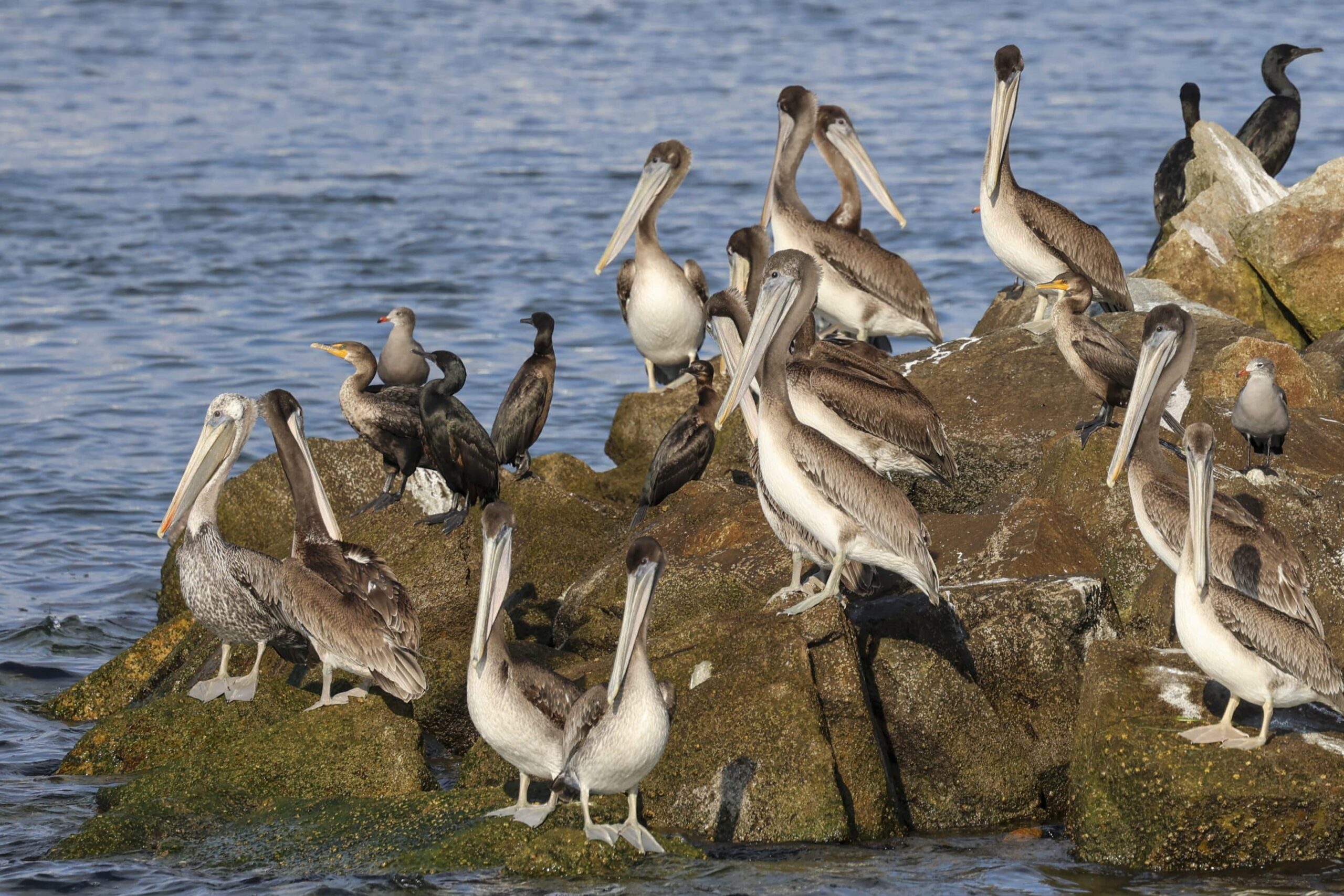
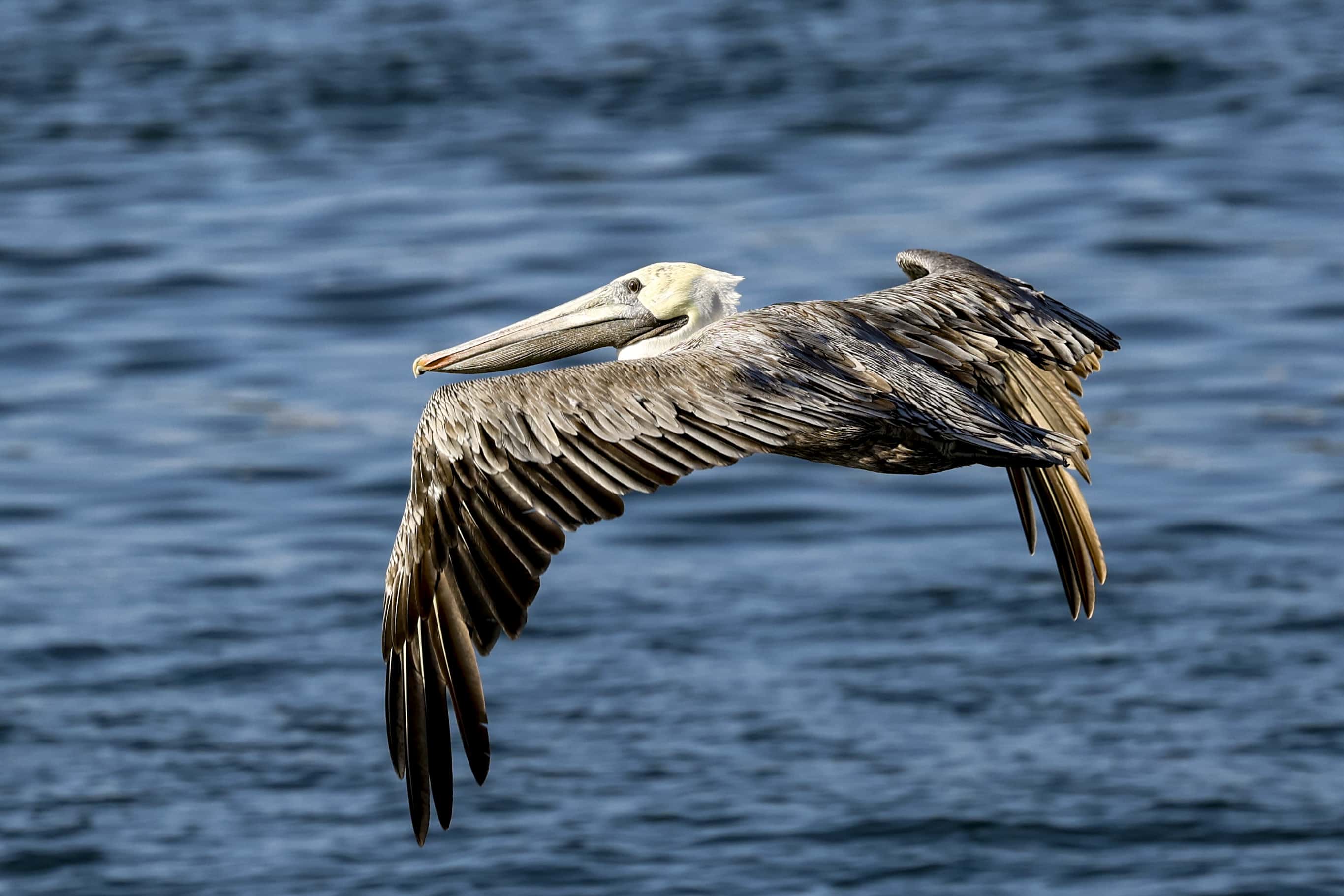
The M/V Privateer with Captain Brian Piersall, our galley bartender Cole, deckhands Austin and Joe and naturalist Greg was ready for onboarding our intrepid guests and soon-to-be ocean passengers for the sunset trip. We enjoyed seeing the antics of the California sea lions at the end of the floating bait dock. A couple of them were balanced on the big, yellow mooring ball, striking a pose. We saw a Snowy egret right next to the larger Great Egret. Cormorants, gulls, pelicans and a great blue heron were also spotted. We encountered only a slight swell and little wind chop and became true mariners as we exited the Mission Bay Channel entrance into the Pacific Ocean.
We made it to the Nine-Mile Bank and beyond to border waters and spotted two pods of Long-beaked common dolphins with enormous pods and many thousands of seabirds in Mexican waters to the south. It helped having a flock of brown pelicans plunge diving in the distance to mark where all the dolphins were porpoising. We saw many hundreds of the black-vented shearwaters seeming to materialize as they surfaced amongst the hungry dolphins. The dolphins were changing direction often, darting to and fro to capture their next meal.
We investigated the dolphins almost as much as the dolphins looked at us. On our way back, we were hoping to witness the fabulous atmospheric phenomenon known as the Green Flash, but unfortunately, there was a distant marine layer hovering overt the horizon. The green flash occurs when the tip of the setting sun turns green due to refraction. It only lasts for a split second, hence the name green flash (not a flash in the sky, but of short duration). It requires a clear horizon. Certainly, a stunning thing to see—not often seen—at sundown. We always are surprised by what we witness out on the ocean, so come join us soon. -Naturalist Greg McCormack