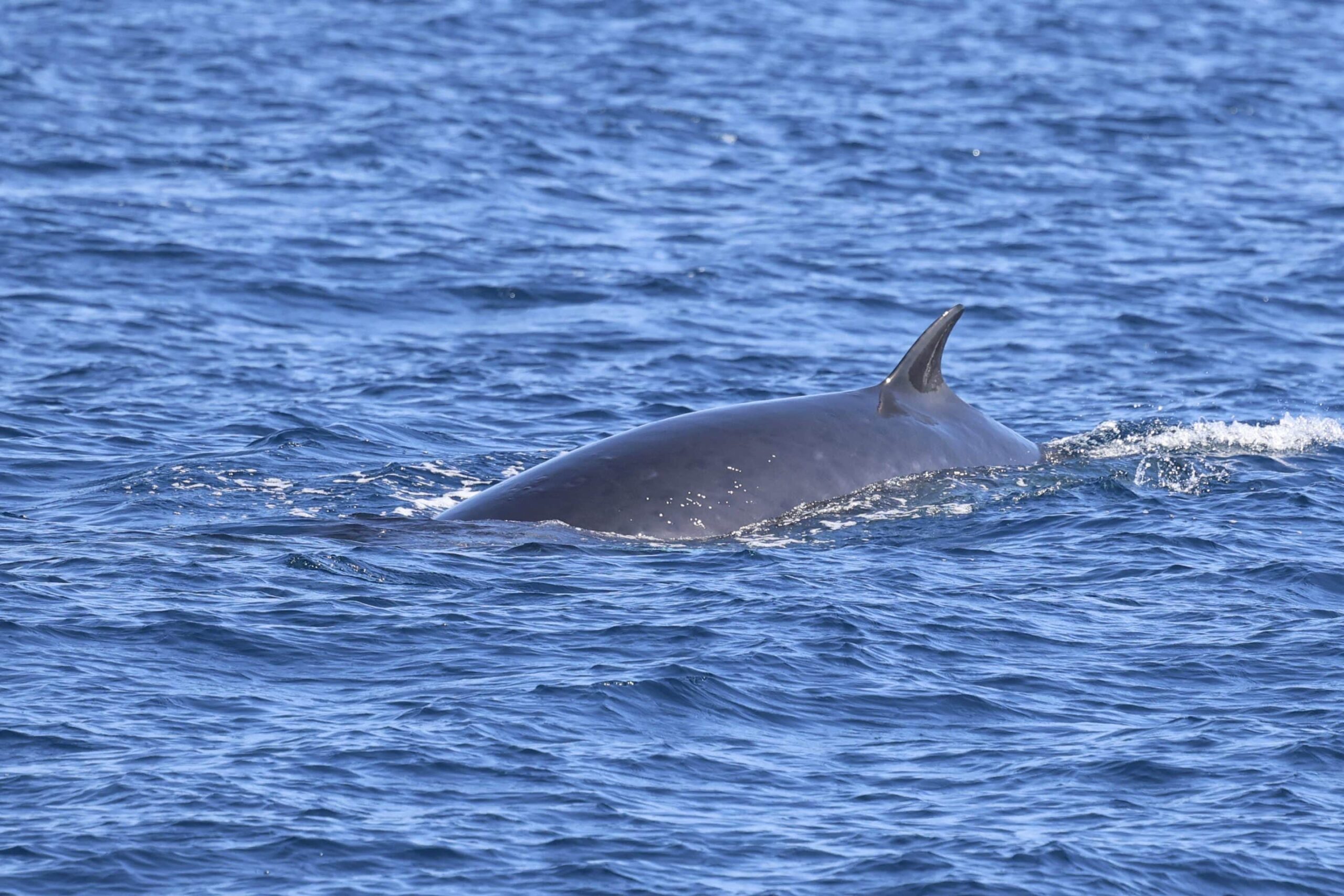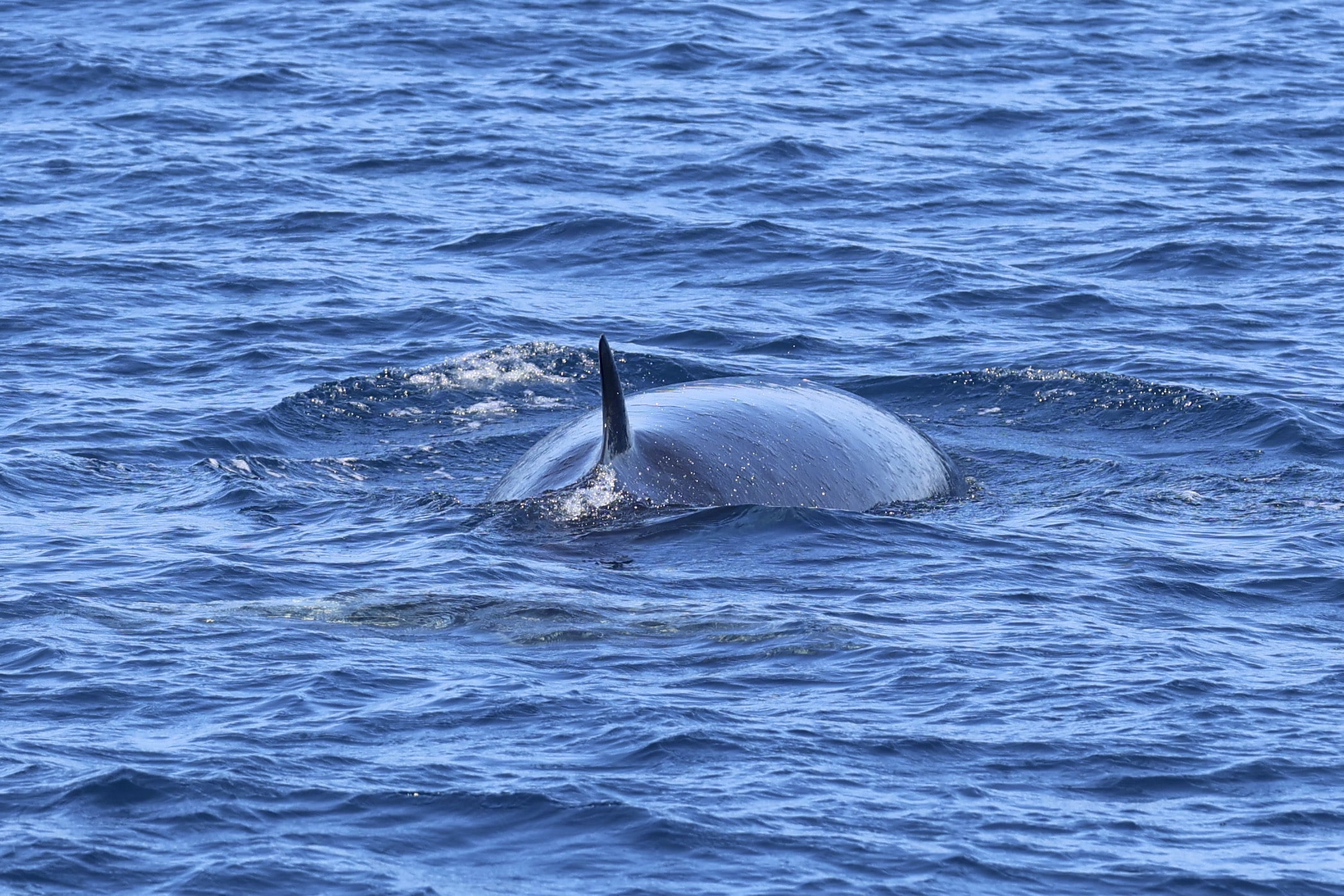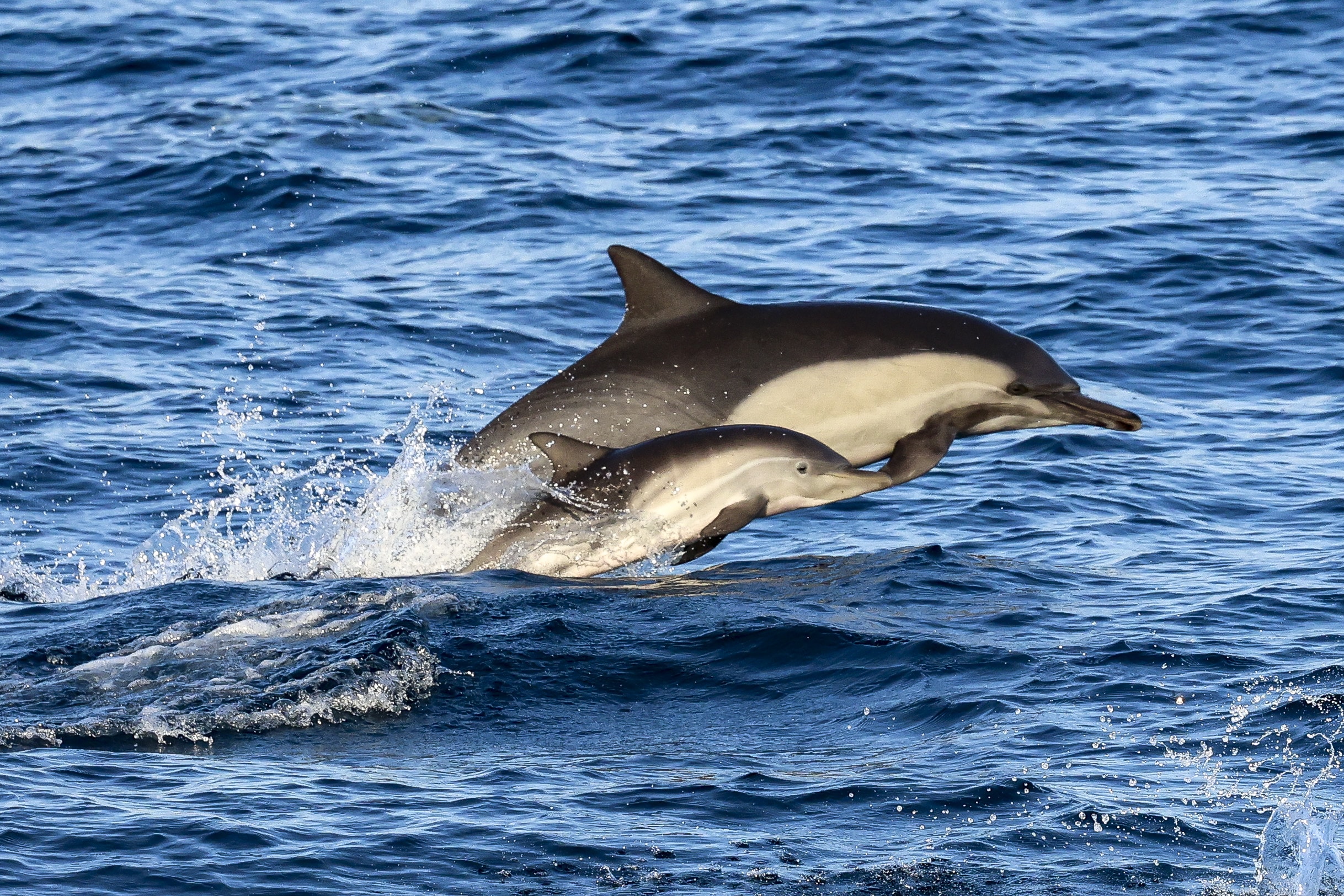
Glassy seas, amazing visibility and fun wildlife sightings! We hung out with a Minke whale, a MEGApod of Common dolphins, and a handful of Offshore bottlenose dolphins!
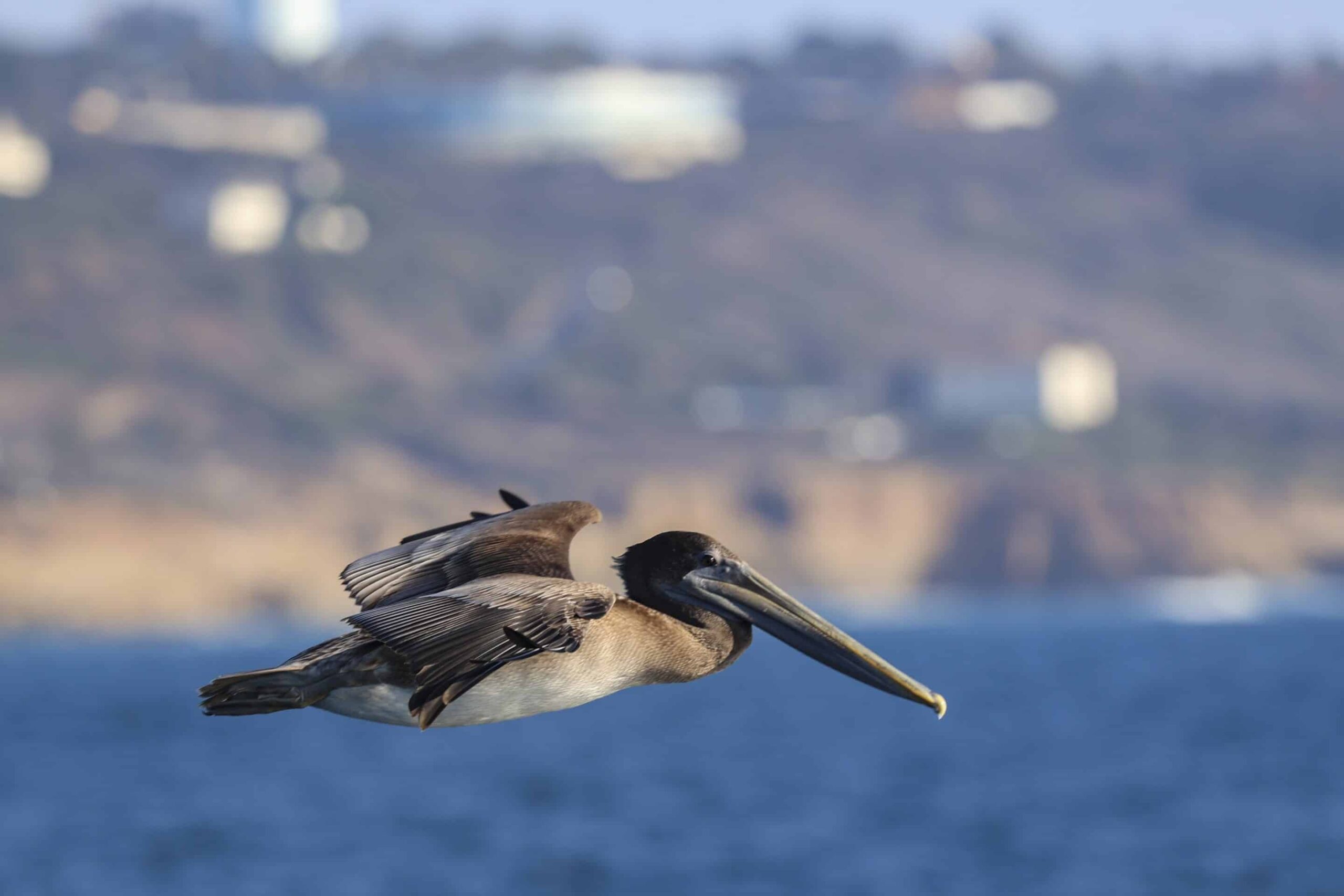
For our morning trip we cruised out to the west and scanned the glassy ocean for wildlife. We found a fun small pod of ~10 Long-beaked Common dolphins headed south. We continued out to the SW and spotted ~50 Long-beaked Common dolphins. They were racing to the south really fast! The water clarity was amazing as we could see at least 20-ft down into the water. We ventured out to the SW, passed the drop-off and got to the 9-mile bank. Out there we spotted squadron after squadron of California brown pelicans! They were flying in a V-formation or in a long line all headed north. On our way in we spotted a small unidentified juvenile shark, and a couple of Mola molas.
On the afternoon trip, we set out to the north and enjoyed the calm seas and amazing views. We even had blue and sunny skies making for nice ride up the coast. It was bit quiet until we got to about 10-miles from shore when we spotted a big, active pod of ~200 Long-beaked Common dolphins. We almost reached them when a Stinky Minke surfaced with a big puffy spout on our starboard side! We waited and again it surfaced close by. We got great looks as it seemed to investigate our boat. We watched pop up all around our boat. Captain Michael scanned to the south and spotted a couple thousand of Long-beaked Common dolphins! They were all spread out over a mile wide and headed north! We were taken aback by their amazing energy as they raced past us. We got some great close-up looks as they rode the bow and surfed our wake! We had a huge 4-ft south swell that the dolphins leaped out of! So fun! On our way in we spotted another pod of ~150 Long-beaks to top it all off!
We have one more trip to go! We will keep you updated.
Naturalist,
Vanessa
We went way offshore to the 9-Mile Bank, part of the Coronado Escarpment. It is an underwater ridgeline with interesting bathymetry for scientists that tow a torpedo-like device that does side-scan sonar, a type of mapping of the bottom of the ocean. Upwelling occurs way out here, which occurs when winds blow the surface waters away from the coast and cool, nutrient-rich waters come to the surface from the depths, leading to blooms of algae, the phytoplankton, which in turn feeds the zooplankton, the fish, the cetaceans and seabirds. We learned of food chains as kids, but this is more of a complex food web in which many animals eat each other.
Perfect weather, calm seas and excellent visibility. We found a total of around 750 common dolphins, just a few a couple of miles beyond the jetties then another 400 long-beaked common dolphins out toward the southwest and the Coronado Islands. We could see 1000’s of birds another 3-miles south of the border over the Coronado Canyon, but had to turn around as most of us were without US Passports and didn’t want to take a chance with the US Coastguard or Mexican Navy.
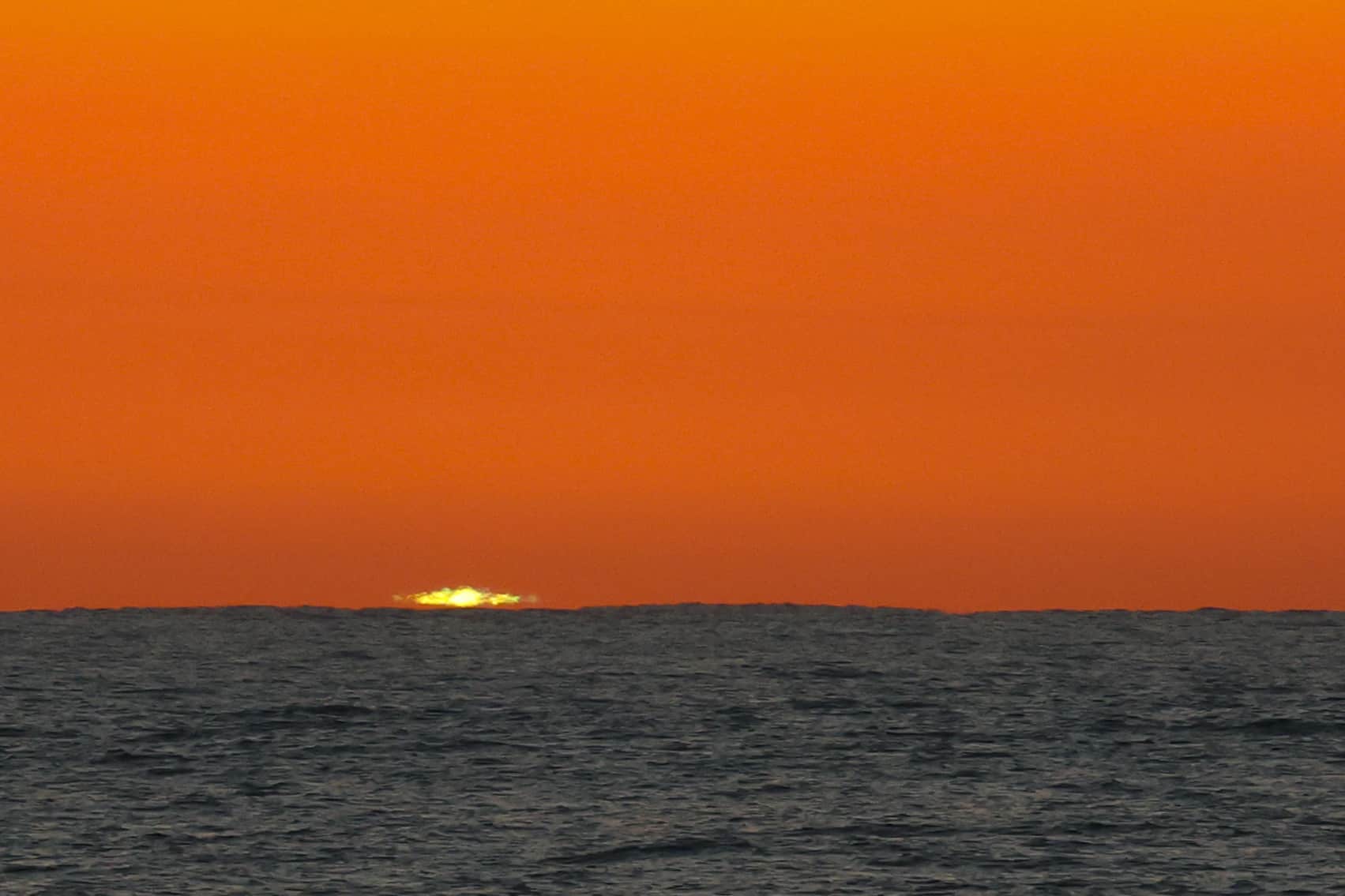
Captain Austin gave us great looks at another pod of 300 long-beaked common dolphins out toward the setting sun where one of those huge car carrier ships, known as a ro-ro for roll-on and roll-off. After sunset, with a lovely first quarter moon in the sky, a shout went out and we saw the Falcon 9 rocket flight from Vandenberg Space Force Base north of Point Conception and Santa Barbara. Apparently it will launch another 27 Starlink satellites to join the 20,000+ already out there in orbit. We saw strobe lights from the lobster fisherman and their traps at the outside and inside of Mission Bay channel. –Naturalist Greg McCormack