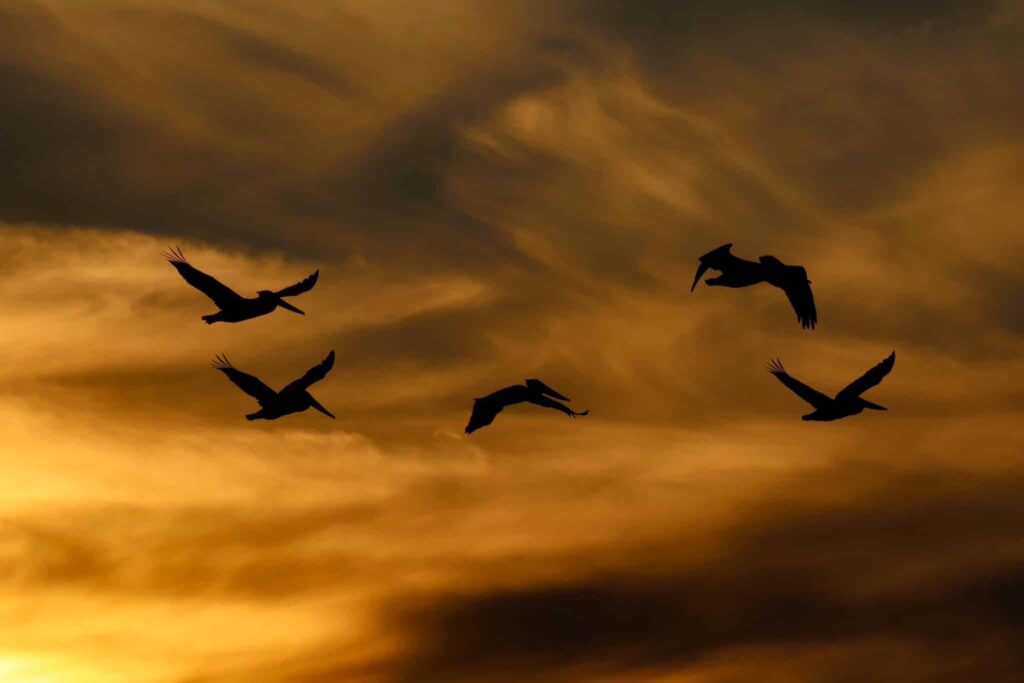
The M/V Privateer with Captain Brian Piersall, our galley bartender Jen, deckhands Terrell, Joe, Taylor and Chuckie and naturalist Greg was ready for onboarding our intrepid guests and soon-to-be ocean passengers for the afternoon trip. After tossing the lines and embarking on our tour, we enjoyed seeing the antics of the California sea lions at the end of the floating bait dock. A couple of them were balanced on the big, yellow mooring ball, striking a pose. We saw a Snowy egret right next to the larger Great Egret. Cormorants, gulls, pelicans and a great blue heron were also spotted. We encountered only a slight swell, a little wind chop and our passenger guests all became true mariners as we exited the Mission Bay Channel entrance into the Pacific Ocean.
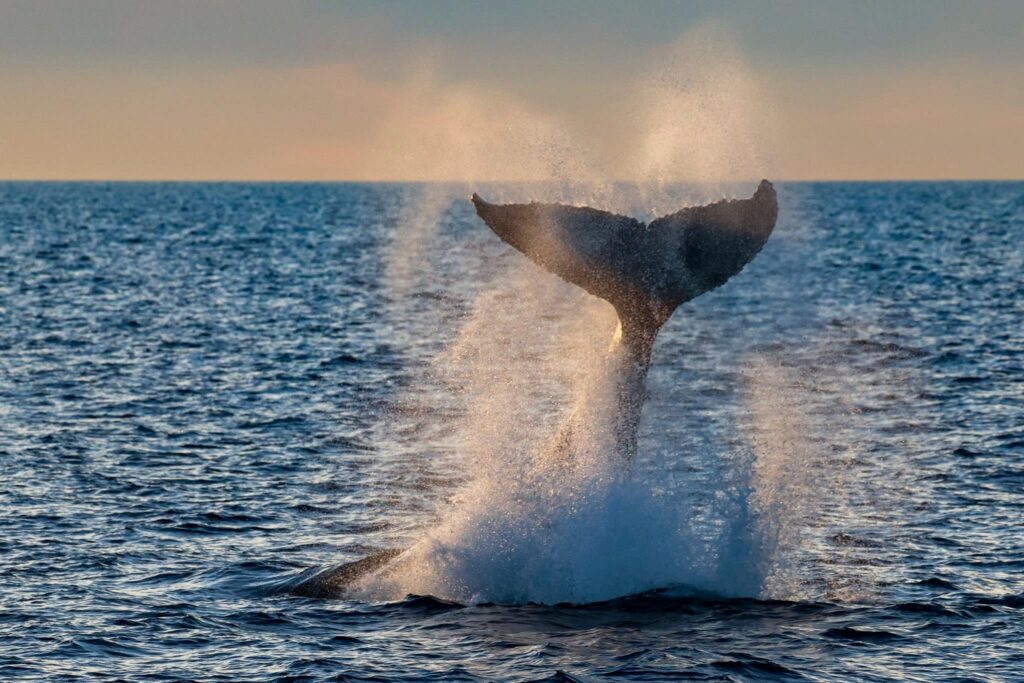
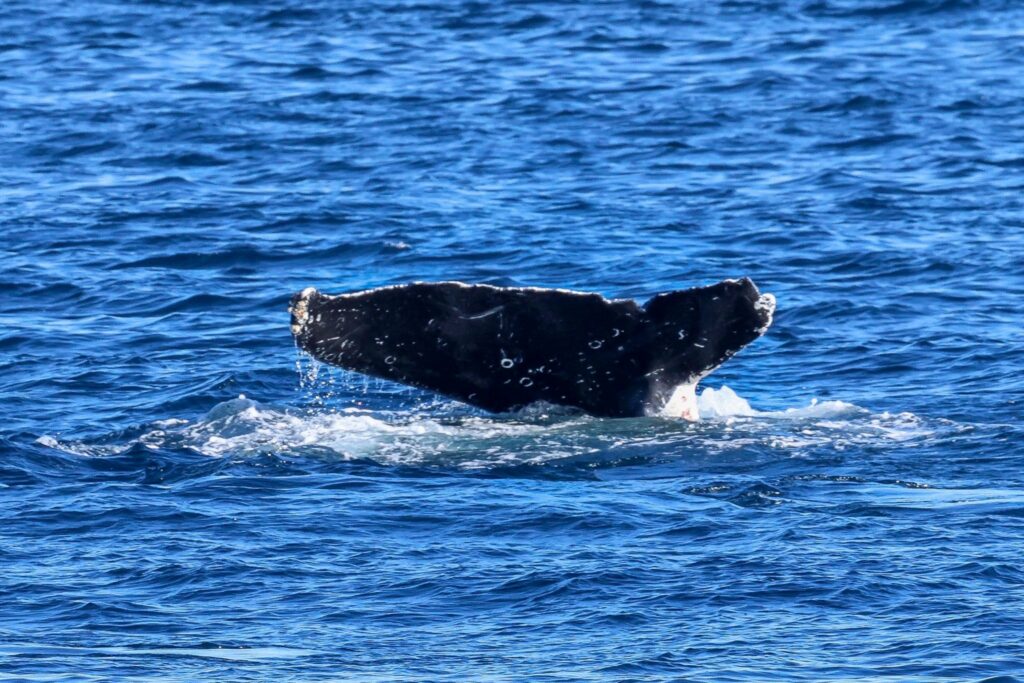
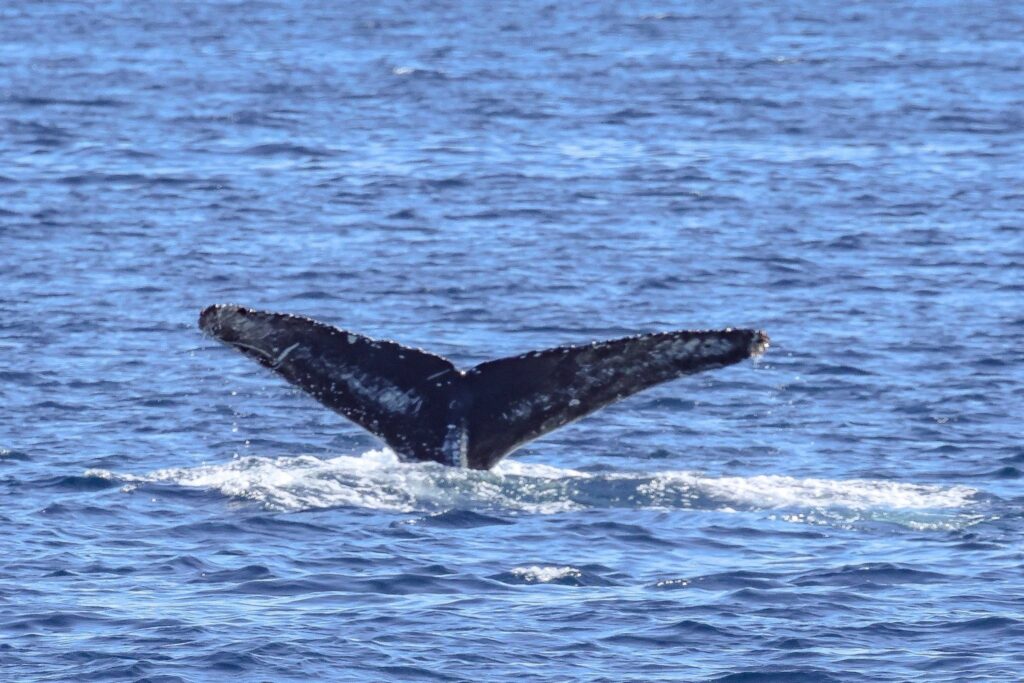
We made it to the Nine-Mile Bank—close to the international border—where we spotted four humpback whales spouting or blowing far out on the distant horizon. As soon as we arrived, they dove and showed us their tail flukes. A lot of “oohs” and “ahhs” emanated from our passengers! One of the whales had only one fluke, a result of running into derelict or active fishing gear. Some whales that are entangled are reported to a volunteer group of trained experts that do whale entanglement trainings to disentangle a whale. Entanglements, along with ship strikes are the primary threats to the survival of humpbacks.
These whales are migrating from their summer feeding grounds in higher latitudes to their winter breeding grounds in lower latitudes, either Mexico or Central America. Most of the whales we see are going to the Revillagigedo archipelago or Bay of Banderas, the latter near Puerto Vallarta in Jalisco and Nayarit on the Mexican riviera.
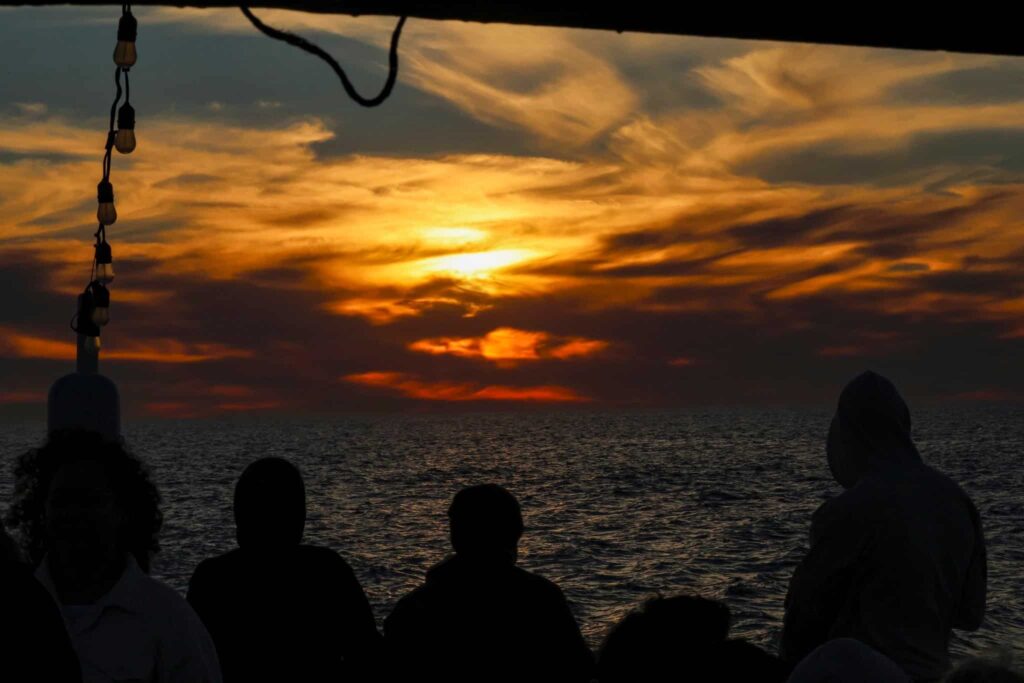
On our sunset trip, Captain Brian brought us far offshore. We could barely see San Clemente Island, part of the Channel Islands, located about 70-miles from San Diego. We saw the snow covering the top of 10,834’ Mount San Jacinto in Riverside County to the northeast past LaJolla and the north county of San Diego.
We got into deeper water and saw about 400 long-beaked common dolphins, many of them taking a break from foraging to come play with our vessel. Then we heard “there she blows” from a few guests, as a humpback whale surfaced right in front of our boat.
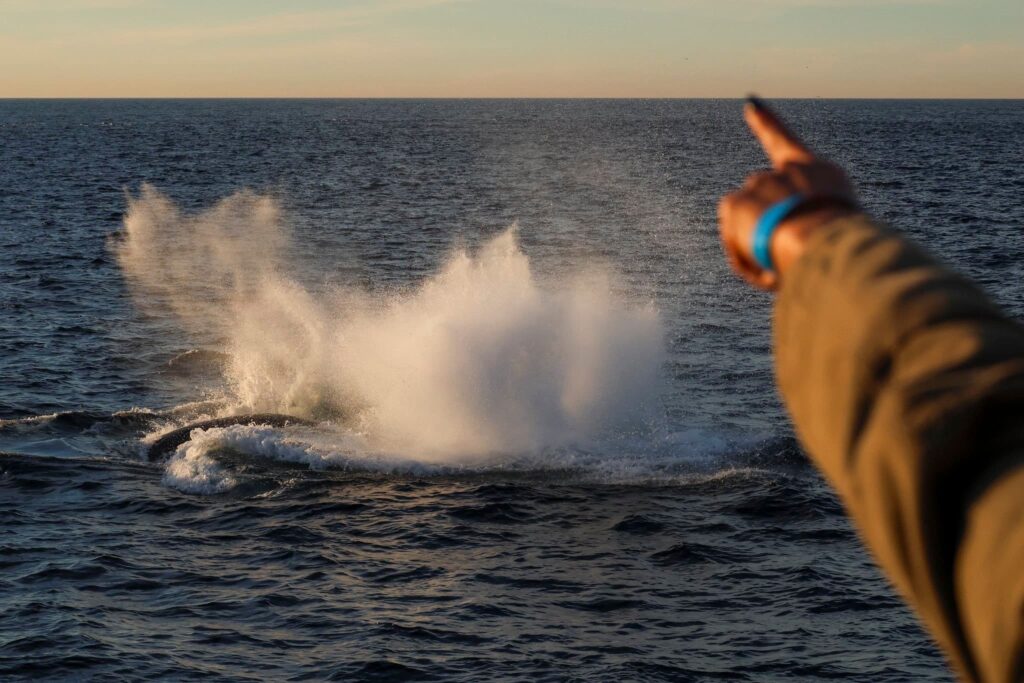
“We’re gonna need a bigger boat”, many of us thought, as the whale turned-around and headed right underneath our boat, which was idling in 800-feet of water. This is what we call a “friendly” whale. Our whale started doing tail throws, creating huge splashes.
We want to wish all of our followers a grateful and enjoyable weekend holiday. And remember to come visit our feathered and flippered friends soon on a San Diego Whale Watch. Happy Thanksgiving, everyone. —Marine Educator Greg McCormack